Short answer
The Grand Tour of Switzerland is the official 1,643 km (1,020-mile) road trip around the country: 22 lakes, 5 Alpine passes and 13 UNESCO World Heritage sites, signposted all the way and best driven clockwise from April to October. Ten days covers the highlights: Rhine Falls, Appenzell, the Engadine, Ticino's lakes, the Gotthard and Furka passes, Zermatt, Lake Geneva, Gruyères and Interlaken.
On this page 12 sections
- The route at a glance
- Days 1–2: Rhine Falls, Appenzell and a thermal soak
- Day 3: Flims and the Julier Pass to the Engadine
- Day 4: Over the San Bernardino to Ticino
- Day 5: The Tremola road over the Gotthard
- Days 6–7: The Furka Pass and Zermatt
- Day 8: Down the Rhône to Lake Geneva
- Day 9: Gruyères and the Jaun Pass to Interlaken
- Day 10: Brünig Pass, Lucerne and back to Zurich
- Practical tips for the Grand Tour
- Shorter on time?
- Frequently asked questions
Switzerland is a train country, but the Grand Tour is the exception that proves the rule. It's the country's official road trip: a signposted loop of 1,643 km (about 1,020 miles) that strings together 22 lakes, five Alpine passes and 13 UNESCO World Heritage sites. Follow the brown "Grand Tour of Switzerland" signs and you'll drive from the Rhine Falls to palm-lined Ticino, over glacier passes to the Matterhorn, and along the vineyards of Lake Geneva.
You can't do all of it in a week without living in the car. This 10-day version keeps driving days under four hours and ends every evening somewhere worth waking up in, often with a pool or a thermal bath.
The route at a glance
| Day | Route | Night | Driving |
|---|---|---|---|
| 1 | Zurich → Rhine Falls → Stein am Rhein → Appenzell | Weissbad | ~3 h |
| 2 | Appenzell → Bad Ragaz | Bad Ragaz | ~1 h |
| 3 | Bad Ragaz → Flims → Julier Pass → Engadine | St. Moritz / Pontresina | ~3 h |
| 4 | Engadine → San Bernardino Pass → Lake Maggiore | Ascona | ~3.5 h |
| 5 | Ascona → Gotthard Pass (Tremola) → Andermatt | Andermatt | ~2.5 h |
| 6 | Andermatt → Furka Pass → Täsch → Zermatt | Zermatt | ~3 h |
| 7 | Zermatt (car parked in Täsch) | Zermatt | — |
| 8 | Täsch → Rhône valley → Lavaux | Montreux / Vevey | ~2.5 h |
| 9 | Montreux → Gruyères → Jaun Pass → Interlaken | Interlaken area | ~3 h |
| 10 | Interlaken → Brünig Pass → Lucerne → Zurich | — | ~2 h |
Driving times are without stops. In July and August, add 30 to 50% for pass traffic and photo breaks.
Days 1–2: Rhine Falls, Appenzell and a thermal soak
Pick up the car in Zurich and head north to the Rhine Falls, one of the most powerful waterfalls in Europe, then to Stein am Rhein, whose painted medieval façades look almost too perfect. In the afternoon, drive into the green hills of Appenzell, the most traditional corner of the country, with its colorful wooden houses and the Alpstein peaks behind.
On day 2, walk to the Seealpsee lake or ride up to Ebenalp in the morning, then drive down the Rhine valley to Bad Ragaz and spend the evening in the Tamina Therme's warm thermal water.
Hotel Hof Weissbad
Weissbad · Appenzell Innerrhoden
Why we picked it: Renowned wellness hotel at the trailheads of the Alpstein (Seealpsee, Ebenalp).
Check rates & availability →Grand Resort Bad Ragaz
Bad Ragaz · St. Gallen
Why we picked it: Five-star spa resort fed by the Tamina gorge thermal spring.
Check rates & availability →Tamina Therme
Bad Ragaz · St. Gallen
Why go: Public thermal baths with indoor and outdoor pools at 36°C.
Day 3: Flims and the Julier Pass to the Engadine
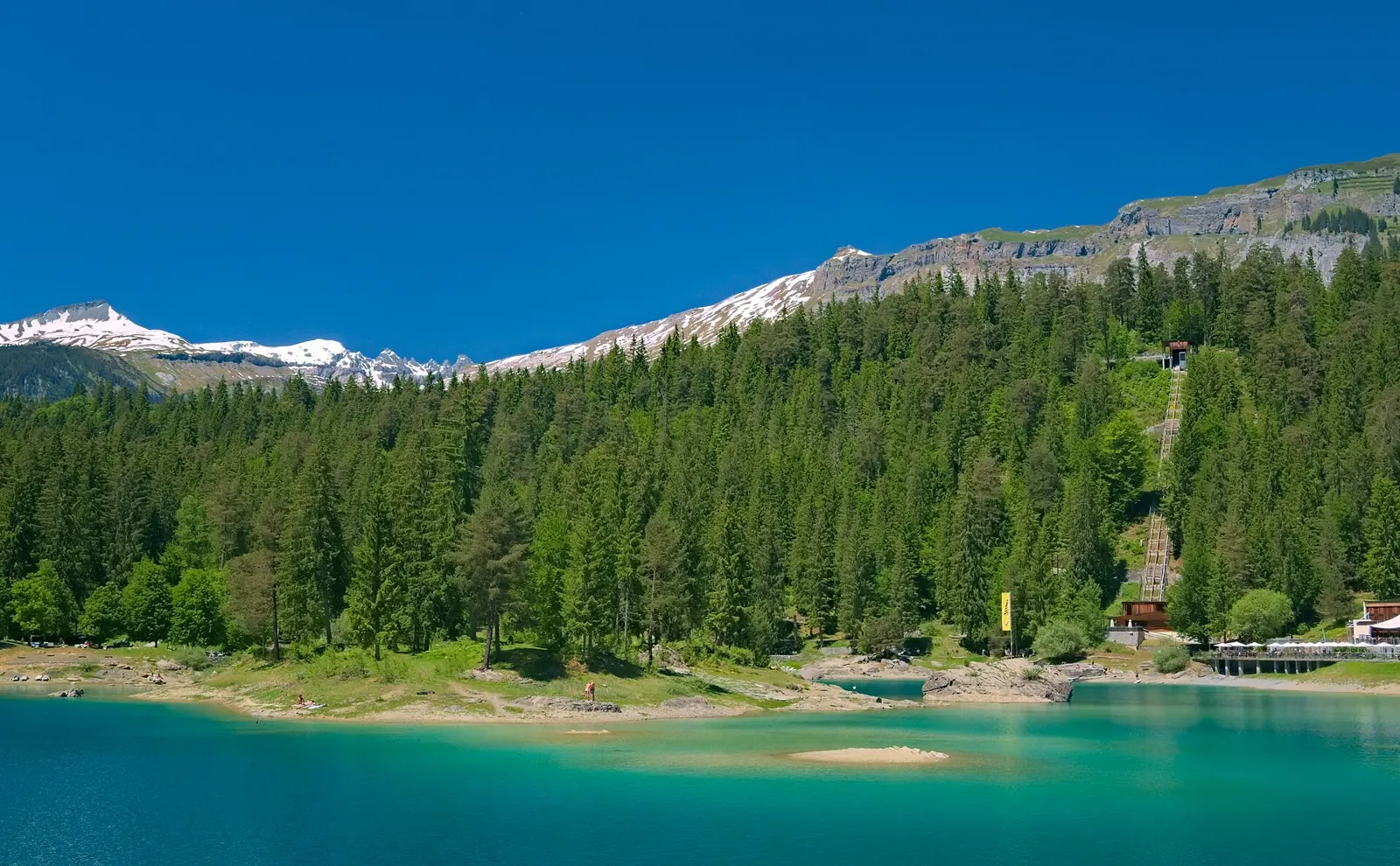
Stop at Flims for a swim or a walk around the Caumasee, a startlingly turquoise forest lake, and look down into the Rhine Gorge (Ruinaulta), Switzerland's "Grand Canyon". Then climb the Julier Pass into the Engadine, a high, sunny valley of lakes and larch forests. Sleep in St. Moritz or quieter Pontresina.
Waldhaus Flims
Flims · Graubünden
Why we picked it: Forest resort near the Caumasee swimming lake and Rhine Gorge trails.
See rates nearby →Grand Hotel Kronenhof
Pontresina · Graubünden
Why we picked it: Belle-époque grand hotel with a modern spa, next to the Roseg valley trails.
Check rates & availability →Kulm Hotel St. Moritz
St. Moritz · Graubünden
Why we picked it: Historic St. Moritz hotel with a spa and outdoor pool over the lake.
Check rates & availability →Day 4: Over the San Bernardino to Ticino
Today the landscape flips. Drive back over the Julier and south over the San Bernardino Pass, and within a few hours you're among palm trees, granite villages and Italian espresso in Ticino. Stop at the castles of Bellinzona (a UNESCO site), then settle on the shore of Lake Maggiore in Ascona.
Want Lake Como instead? Take the Maloja Pass from St. Moritz and cross Italy to Lugano: see our Alps road trips from Switzerland.
Castello del Sole
Ascona · Ticino
Why we picked it: Resort hotel on its own estate by Lake Maggiore, with a large spa.
Check rates & availability →Hotel Eden Roc
Ascona · Ticino
Why we picked it: Lakefront hotel on Lake Maggiore with a spa and pools.
Check rates & availability →Hotel Giardino Ascona
Ascona · Ticino
Why we picked it: Mediterranean-style resort with an Ayurveda spa and indoor/outdoor pools.
Check rates & availability →Day 5: The Tremola road over the Gotthard
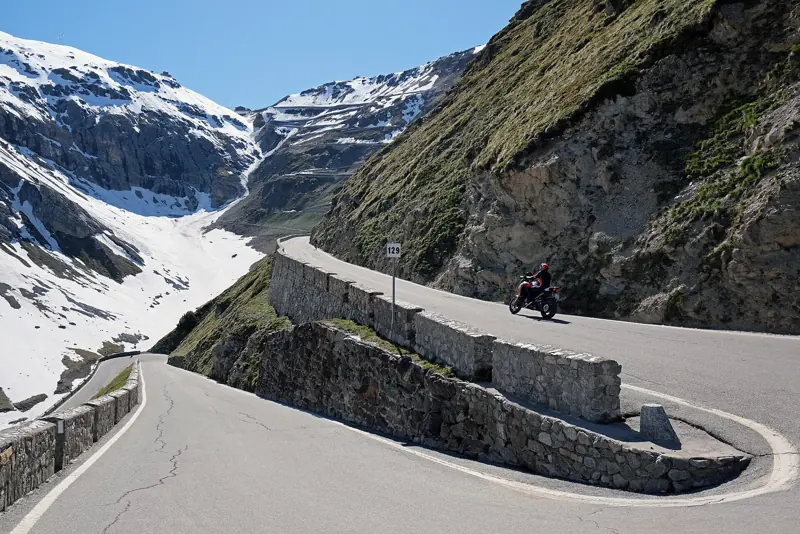
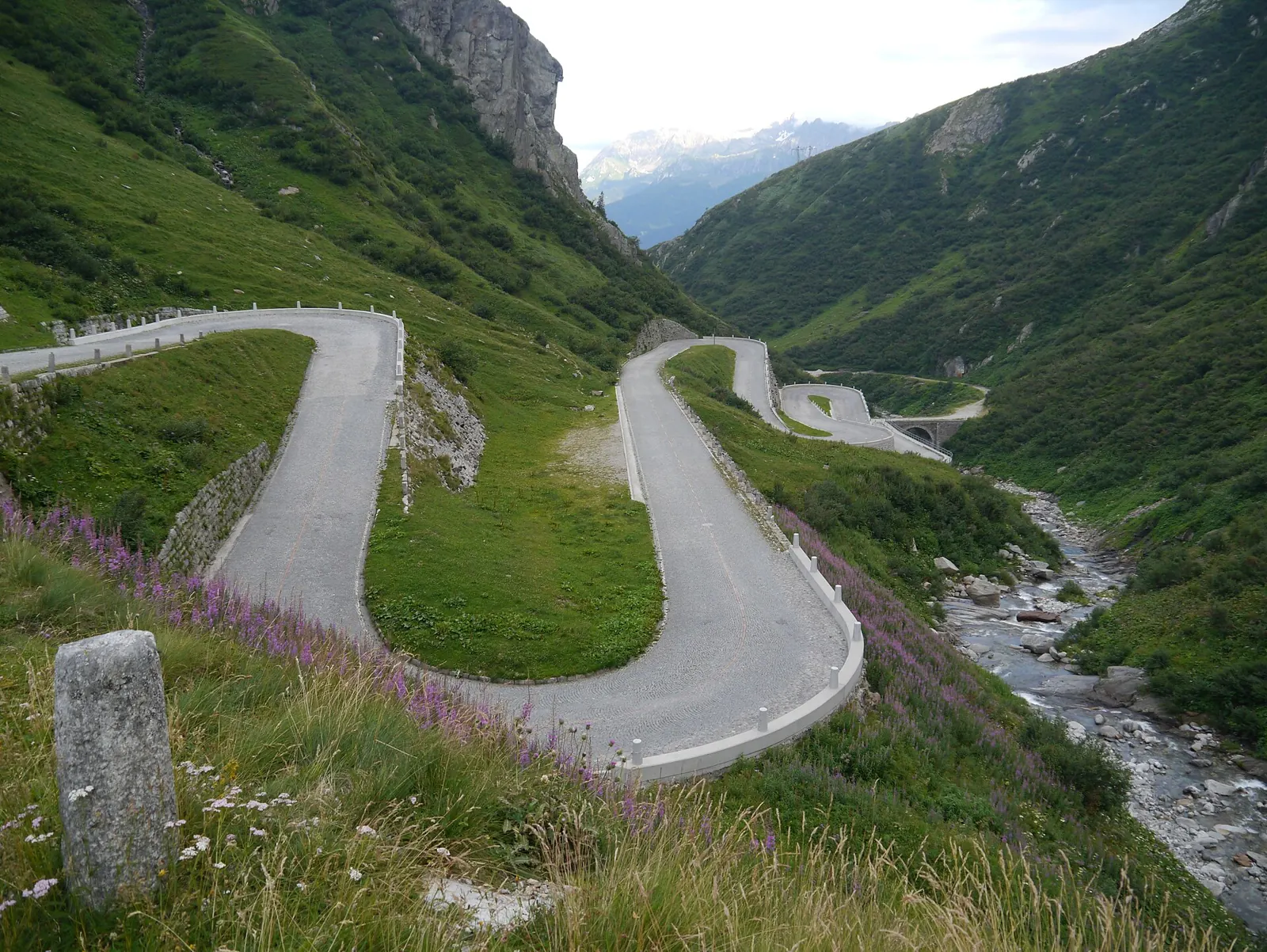
Drive up the Leventina valley and leave the motorway for the Gotthard Pass. On the south side, the Tremola is a cobbled road of tight hairpins built in the 1800s, one of the most photographed roads in the Alps. Cross the top and descend to Andermatt for the night.
The Chedi Andermatt
Andermatt · Uri
Why we picked it: Alpine-Asian luxury hotel with a large spa and indoor pool.
Check rates & availability →Radisson Blu Hotel Reussen
Andermatt · Uri
Why we picked it: More affordable Andermatt option with a spa and pool.
Check rates & availability →Days 6–7: The Furka Pass and Zermatt
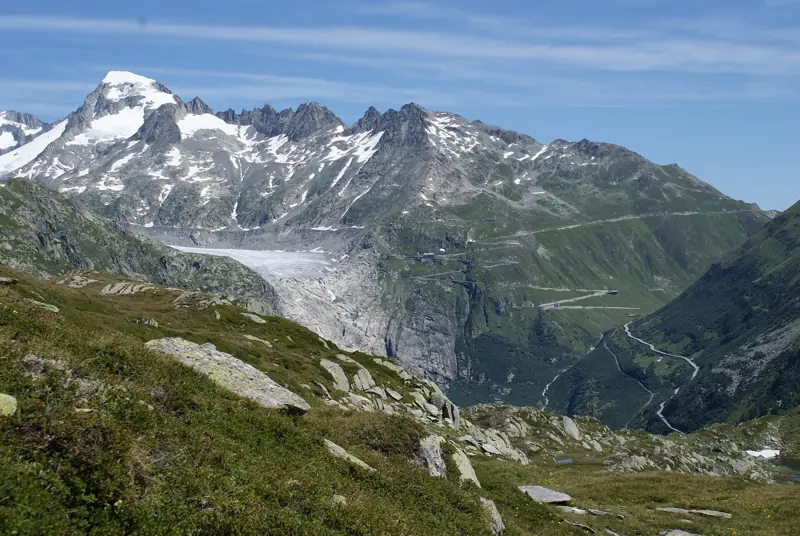
The highest point of the Grand Tour: the Furka Pass at 2,429 m (7,969 ft), past the Rhône Glacier. Then down the Goms valley to Täsch, where you park and ride the shuttle train to car-free Zermatt (about 12 minutes).
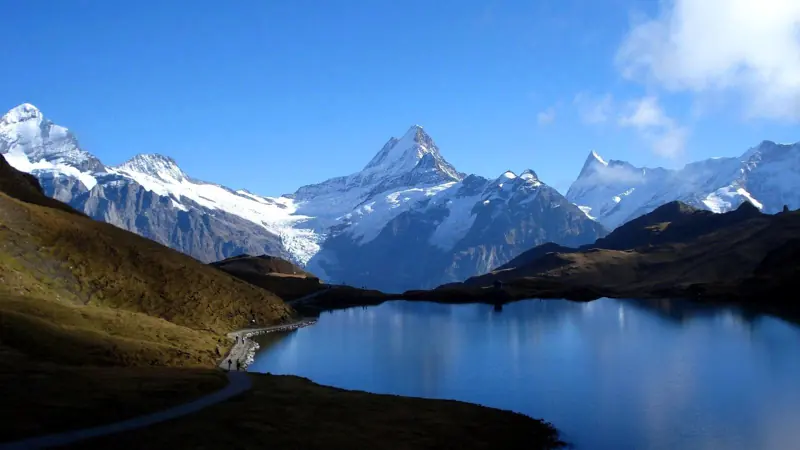
Give Zermatt a full day: the Five Lakes Walk for Matterhorn reflections, or the Gornergrat railway. Our Swiss Alps road trip has more on the passes around Andermatt.
Mont Cervin Palace
Zermatt · Valais
Why we picked it: Grand hotel in the center of car-free Zermatt with a large spa and indoor/outdoor pool.
Check rates & availability →The Omnia
Zermatt · Valais
Why we picked it: Design hotel on a rock above the village, with an indoor-outdoor pool and Matterhorn views.
Check rates & availability →Day 8: Down the Rhône to Lake Geneva
Collect the car and follow the Rhône valley west. Detour up to Leukerbad for a morning soak, or stop at the Bains de Saillon. Then drive the Corniche road through the Lavaux vineyards (UNESCO) above Lake Geneva, with a wine tasting in a village cellar, and sleep in Montreux or Vevey. Walk to the Château de Chillon in the evening light.
Fairmont Le Montreux Palace
Montreux · Vaud
Why we picked it: Belle-époque lakefront hotel with a spa.
Check rates & availability →Hôtel des Trois Couronnes
Vevey · Vaud
Why we picked it: Lakefront palace in Vevey with a spa and 24-meter indoor pool.
Check rates & availability →Les Bains de Saillon
Saillon · Valais
Why go: Thermal pools in the Rhône valley wine country.
Day 9: Gruyères and the Jaun Pass to Interlaken
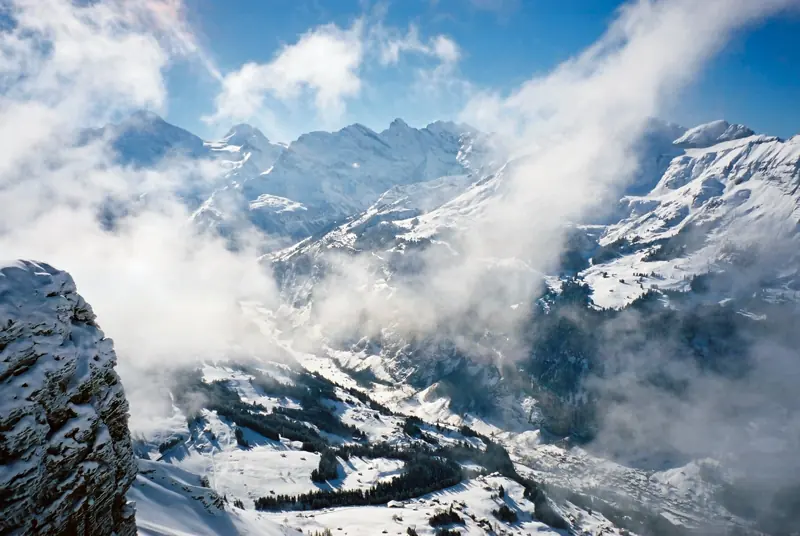
Drive up to Gruyères: a car-free hilltop village with a castle, and the cheese dairy below where you can watch Gruyère being made. Try the double cream with meringues. Then cross the Jaun Pass and drive along Lake Thun to Interlaken, or straight up to Grindelwald or Wengen. Our guide to where to stay in Interlaken compares the options.
Hotel Cailler
Charmey · Fribourg
Why we picked it: Hotel linked to Les Bains de la Gruyère.
Check rates & availability →Victoria-Jungfrau Grand Hotel & Spa
Interlaken · Bern (Bernese Oberland)
Why we picked it: Interlaken's landmark grand hotel with a 5,500 m² spa.
Check rates & availability →Beatus Wellness- & Spa-Hotel
Merligen · Bern (Bernese Oberland)
Why we picked it: Lakeside spa hotel on Lake Thun, 20 minutes from Interlaken.
Check rates & availability →Day 10: Brünig Pass, Lucerne and back to Zurich
The easy finale: over the gentle Brünig Pass, along Lake Lungern and Lake Sarnen to Lucerne for lunch by the Chapel Bridge, and back to Zurich (about 50 minutes) to drop the car.
Practical tips for the Grand Tour
- Car rental: pick up and drop off in Zurich. Swiss rental cars include the motorway vignette. Book an automatic early if you need one.
- Passes: the Furka, Grimsel, Gotthard and San Bernardino passes are summer roads. They usually open between late May and June and close in October or November. Check the TCS pass status before each driving day.
- Parking: Zermatt and Wengen are car-free. Park in Täsch or Lauterbrunnen.
- Fuel and breaks: fill up in the valleys. Pass-top restaurants are busy at lunch; picnic at a viewpoint instead.
- Driving rules: headlights on at all times, 80 km/h outside towns, 120 km/h on motorways, and yellow Postbuses always have priority on mountain roads.
Shorter on time?
- 5 days: the passes loop from our Swiss Alps road trip (Lucerne, Grindelwald, Andermatt, Leukerbad, Zermatt, Geneva).
- No car: the same highlights work by train. See our Switzerland itinerary for 7, 10 or 14 days and Switzerland in summer.
Frequently asked questions
How long is the Grand Tour of Switzerland?
The official route is 1,643 km (about 1,020 miles). Switzerland Tourism suggests at least 7 days; 10 to 14 days lets you stop for hikes, lake swims and a spa evening without long driving days.
When is the best time to drive the Grand Tour?
June to September, when all five high passes are open. The official season runs from April to October, but the Furka, Grimsel and Gotthard passes close for winter and usually open between late May and June.
Which direction should I drive the Grand Tour?
Clockwise is the official recommendation, and the brown-and-white Grand Tour signs are easiest to follow that way.
When should I book hotels for a summer road trip in Switzerland?
Between January and March for July and August. Zermatt, the Engadine and the Jungfrau villages fill up first, and the best-value rooms go early.