Short answer
For a first trip, spend 7 days on Lucerne (2 nights), the Jungfrau region (3 nights) and Zermatt (2 nights). With 10 days, add Lake Geneva (Montreux and the Lavaux vineyards). With 14 days, finish on the Glacier Express to St. Moritz and the Engadine. Fly into Zurich and out of Geneva or Zurich, and move between bases by train.
On this page 7 sections
Most first Switzerland itineraries fail the same way: too many bases, too many hours on trains, and no time to actually stand in front of a mountain. The country is small, but the Alps are slow. A one-hour hop on the map can be three hours with a change in Spiez and a cogwheel train at the end.
So these routes follow one rule: never change hotels more than every two nights, and spend your longest stay in the mountains, not in the cities.
The quick version
| Trip length | Route | Nights |
|---|---|---|
| 7 days | Lucerne → Jungfrau region → Zermatt | 2 + 3 + 2 |
| 10 days | Lucerne → Jungfrau region → Zermatt → Lake Geneva | 2 + 3 + 2 + 2 |
| 14 days | Zurich → Lucerne → Jungfrau → Lake Geneva → Zermatt → Glacier Express → Engadine | 1 + 2 + 3 + 2 + 2 + 3 |
All three work with a Swiss Travel Pass. On the 7-day route, the 8-day pass gives you a spare day for the airport transfer.
7 days: lakes, the Eiger and the Matterhorn
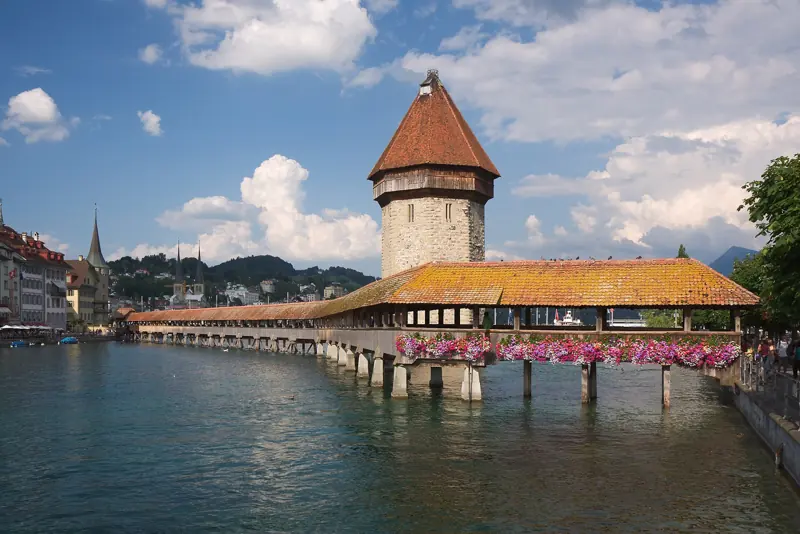
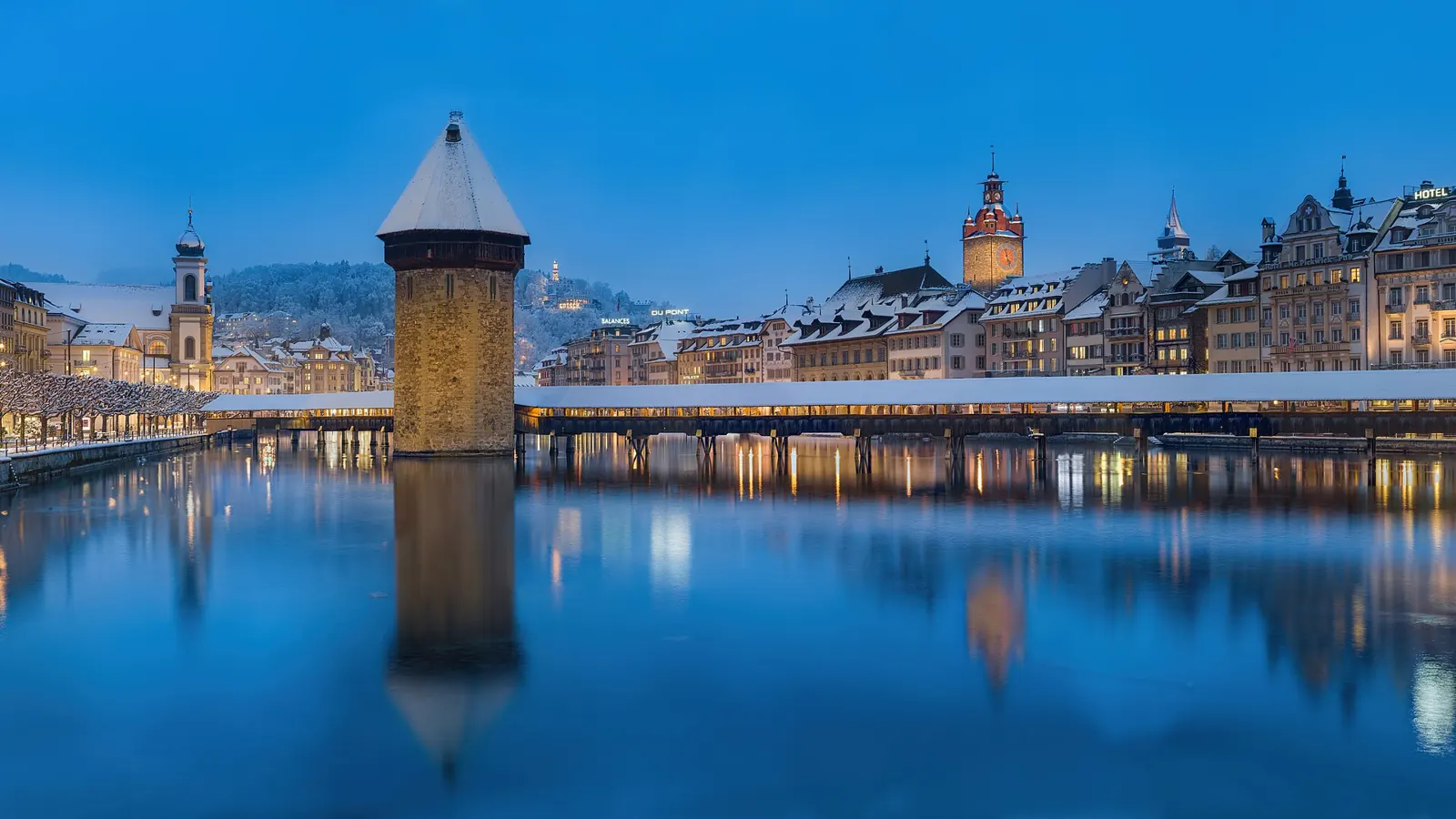
Day 1 – Zurich airport to Lucerne. The train from the airport takes about an hour, so you can be on the lakefront by lunch. Walk the Chapel Bridge, then up to the old city walls (the Musegg towers) for the view back over the roofs. Keep the first day easy: jet lag hits hardest on day two.
Day 2 – Lucerne's mountain. Take the boat to Vitznau and the cogwheel train up the Rigi. Walk down from Rigi Kulm to Kaltbad and soak in the mineral bath before going back down by cable car to Weggis. Our Rigi hike guide has the route. Pilatus is the alternative if the Rigi is in cloud.
Day 3 – To the Jungfrau region. The Luzern–Interlaken Express over the Brünig Pass is one of the prettiest regular train rides in the country, about two hours. Don't stop in Interlaken: carry on to Grindelwald or Wengen and sleep under the Eiger. Our Interlaken vs Lucerne piece explains why.
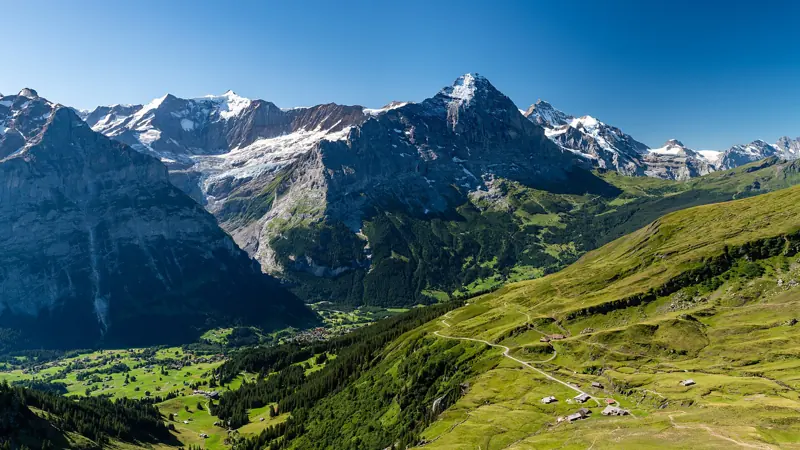
Day 4 – The big mountain day. If the forecast is clear, this is your Jungfraujoch day: Eiger Express from Grindelwald, then the railway through the Eiger. On a cloudy day, swap it for the Lauterbrunnen valley and keep the summit for day 5.
Day 5 – A real hike. Take the gondola to First and walk to Bachalpsee, or do the cliff-edge walk from Mürren to Gimmelwald. Either way you're back for an evening swim in the hotel pool.
Day 6 – Across to Zermatt. About three hours by train via Interlaken, Spiez and Visp. Leave after breakfast and you'll see the Matterhorn from the village by mid-afternoon (Zermatt is car-free, so the e-taxi or your feet take you from the station).
Day 7 – Matterhorn morning. Go up early to Sunnegga for the Five Lakes Walk, or ride the Gornergrat railway. Then the train to Geneva or Zurich airport (about 3.5 to 4 hours), or stay an extra night and fly out the next morning.
Hotel Rössli Gourmet & Spa
Weggis · Lucerne
Why we picked it: Lake Lucerne hotel with open-air saltwater baths, at the foot of the Rigi.
Check rates & availability →Belvedere Swiss Quality Hotel
Grindelwald · Bern (Bernese Oberland)
Why we picked it: Spa hotel with Eiger views, walking distance from the Grindelwald First gondola.
Check rates & availability →Grand Hotel Belvedere Wengen
Wengen · Bern (Bernese Oberland)
Why we picked it: Historic grand hotel in car-free Wengen, above the Lauterbrunnen valley, with spa services.
Check rates & availability →Mont Cervin Palace
Zermatt · Valais
Why we picked it: Grand hotel in the center of car-free Zermatt with a large spa and indoor/outdoor pool.
Check rates & availability →10 days: add Lake Geneva
Follow the 7-day plan, then from Zermatt take the train down the Rhône valley to Montreux (about two and a half hours, with a change in Visp).
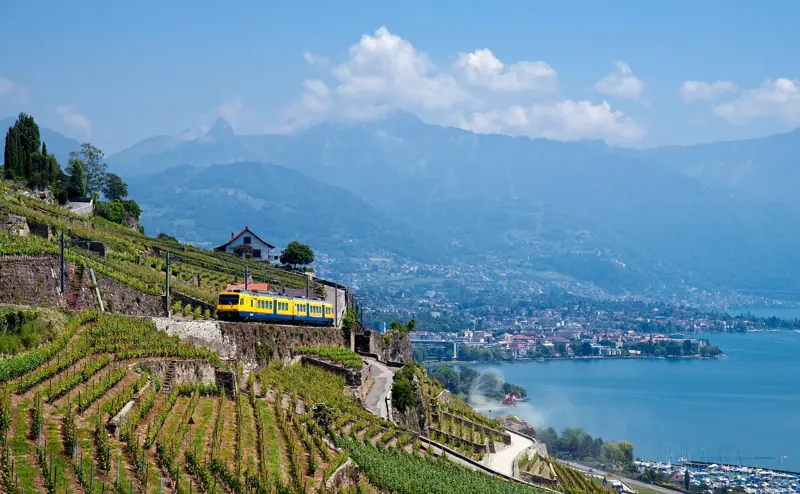
Days 8–9 – Montreux and the vineyards. Walk the lakeside promenade to the Château de Chillon, then spend a day on the Lavaux vineyard hike from Cully to Saint-Saphorin: terraced vines, wine cellars open for tastings, and the Alps across the lake. If you want a soak, the hilltop spa at Le Mirador sits right above the vines.
Day 10 – Fly home from Geneva. The airport is a little over an hour from Montreux by direct train.
Why this order? Ending on the lake means your last days are gentle: wine, swimming and long lunches instead of early cable cars. It's the right note to fly home on.
Fairmont Le Montreux Palace
Montreux · Vaud
Why we picked it: Belle-époque lakefront hotel with a spa.
Check rates & availability →Le Mirador Resort & Spa
Mont-Pèlerin · Vaud
Why we picked it: Hilltop spa resort above the Lavaux vineyards with Lake Geneva views.
Check rates & availability →14 days: the full loop with the Glacier Express
With two weeks, slow everything down and add the east:
- Day 1: Arrive in Zurich and stay in town for a night. See our hikes near Zurich for an easy first walk, or do the old town and the lake.
- Days 2–3: Lucerne and the Rigi.
- Days 4–6: Grindelwald or Wengen.
- Days 7–8: Lake Geneva via the GoldenPass Express from Interlaken to Montreux (a direct panoramic train, about three hours).
- Days 9–10: Zermatt.
- Day 11: The Glacier Express from Zermatt to St. Moritz, eight hours over the Oberalp Pass.
- Days 12–13: The Engadine. Hike above St. Moritz or Pontresina, and soak at Bogn Engiadina in Scuol.
- Day 14: Train back to Zurich airport (about three and a half hours).
Note the Glacier Express takes a seasonal break: in 2026 there is no service from October 11 to December 4. In that window, take regular trains via Visp and Chur instead.
Summer or winter?
These routes work all year, with a few changes:
- June to September: everything is open, including the high hiking trails. Book Zermatt and Grindelwald early for July and August.
- December to March: swap the hikes for sledding, winter walks and skiing. See Switzerland in winter for non-skiers. In December, sleep in Lucerne, Montreux or Zurich a night longer for the Christmas markets.
- Late October to November: the quietest and cheapest window, but many lifts close for maintenance. Check each mountain's website before building your plan around it.
Our best time to visit Switzerland guide goes month by month.
Where to sleep on this route
The one choice that matters most: in the Jungfrau region, sleep up in the villages, not in Interlaken. Our full guide to where to stay in Interlaken and around compares the options, and our planning hub links every guide you need, from budget to entry rules.
Frequently asked questions
How many days do you need in Switzerland?
Seven days is enough for three classic bases: Lucerne, the Jungfrau region and Zermatt. Ten days lets you add Lake Geneva at a calmer pace, and two weeks lets you add the Glacier Express and the Engadine.
What is the best Switzerland itinerary for a first trip?
Zurich → Lucerne (2 nights) → Grindelwald or Wengen (3 nights) → Zermatt (2 nights), then fly home from Geneva or Zurich. It covers a lake city, the Eiger and Jungfrau, and the Matterhorn, with no long drives.
Should I fly into Zurich or Geneva?
Zurich if you start in Lucerne or the Jungfrau region; Geneva if you start on Lake Geneva or in Zermatt. Booking an open-jaw ticket (into one, out of the other) saves you a half day of backtracking.
Do I need a car in Switzerland?
No. Trains, buses, boats and cable cars reach every stop on these itineraries, and Zermatt and Wengen are car-free anyway.