Short answer
The Swiss Travel Pass costs CHF 254 (about $318) for 3 consecutive days in 2nd class and CHF 499 (about $624) for 15 days, per the official price list checked on November 8, 2026. It covers trains, buses and boats across Switzerland, public transport in more than 90 towns, more than 500 museums and three mountains (Rigi, Stanserhorn and Stoos); most other mountains, including Jungfraujoch, are only discounted. It pays off if your full-fare tickets add up to more than about CHF 67 a day on a 6-day pass; for one or two bases, the CHF 150 Half Fare Card is often cheaper.
On this page 10 sections
- How much does the Swiss Travel Pass cost in 2026?
- Is the Swiss Travel Pass worth it? The daily break-even
- What does the Swiss Travel Pass cover?
- What does the Swiss Travel Pass only discount?
- Swiss Travel Pass or Half Fare Card?
- Do children travel free?
- Is the Swiss Travel Pass worth it in winter?
- Our take
- Where to base yourself
- Frequently asked questions
The Swiss Travel Pass is the most-asked question we see from travelers planning Switzerland, and the honest answer is: it depends on how you travel. Here's the math, without the sales pitch.
In short: the Swiss Travel Pass costs CHF 254 for 3 days to CHF 499 for 15 days in 2nd class. It's worth it if your tickets at full fare would cost more than CHF 55 to 85 a day (depending on the pass length). If you stay in one or two bases, compare it with the CHF 150 Half Fare Card first.
How much does the Swiss Travel Pass cost in 2026?
The Swiss Travel Pass costs CHF 254 for 3 consecutive days in 2nd class and CHF 499 for 15 days. The Flex version, where you pick your travel days within one month, costs CHF 20 to 35 more in 2nd class.
| Days | 2nd class | 1st class | Flex 2nd | Flex 1st | Youth 2nd | Youth Flex 2nd |
|---|---|---|---|---|---|---|
| 3 | 254 | 405 | 289 | 461 | 179 | 204 |
| 4 | 309 | 492 | 349 | 555 | 218 | 246 |
| 6 | 399 | 634 | 424 | 674 | 282 | 300 |
| 8 | 439 | 697 | 459 | 729 | 311 | 325 |
| 15 | 499 | 778 | 519 | 819 | 356 | 370 |
Prices in CHF per person, from the official Swiss Travel Pass and Swiss Travel Pass Flex pages on MySwitzerland.com, checked on November 8, 2026. Youth = up to the 25th birthday (30% off). You can buy the pass up to 11 months before its first day.
In US dollars, that's roughly $318 for a 3-day pass, $500 for 6 days and $624 for 15 days in 2nd class, depending on the exchange rate.
Is the Swiss Travel Pass worth it? The daily break-even
The Swiss Travel Pass is worth it when the tickets you'd otherwise buy at full fare cost more than the pass price divided by its days. This table does that division for you.
| Pass (2nd class) | Price | Break-even per travel day | Flex: break-even per travel day |
|---|---|---|---|
| 3 days | CHF 254 | CHF 85 | CHF 96 |
| 4 days | CHF 309 | CHF 77 | CHF 87 |
| 6 days | CHF 399 | CHF 67 | CHF 71 |
| 8 days | CHF 439 | CHF 55 | CHF 57 |
| 15 days | CHF 499 | CHF 33 | CHF 35 |
How to use it: in the SBB Mobile app, look up the full 2nd-class fare for each day's trips (trains, boats, a covered mountain, city trams). If most days come in above the break-even, buy the pass. One real anchor: the Glacier Express full-route ticket alone costs CHF 166 in 2nd class (see our Glacier Express guide), more than half of a 4-day pass, so a trip built around it usually comes out ahead.
What does the Swiss Travel Pass cover?
The Swiss Travel Pass covers trains, buses and boats on the Swiss Travel System network, city transport and museums, plus three mountains in full.
- Trains, buses and boats on the national network, including the lake boats on Lake Lucerne and Lake Geneva.
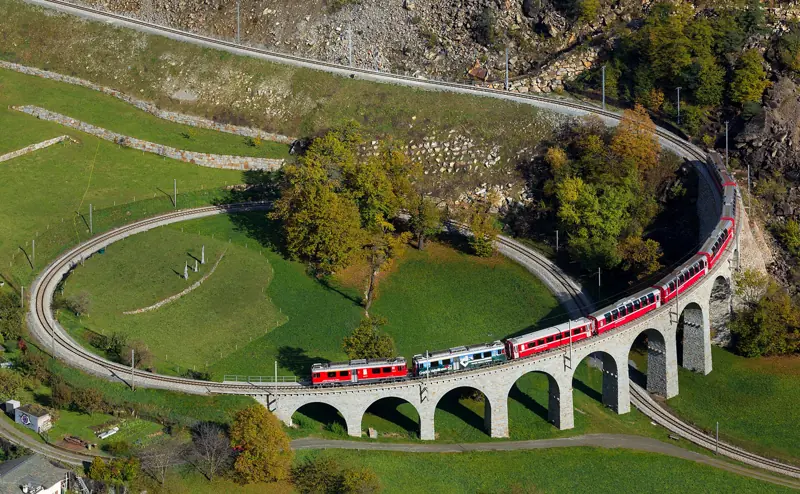
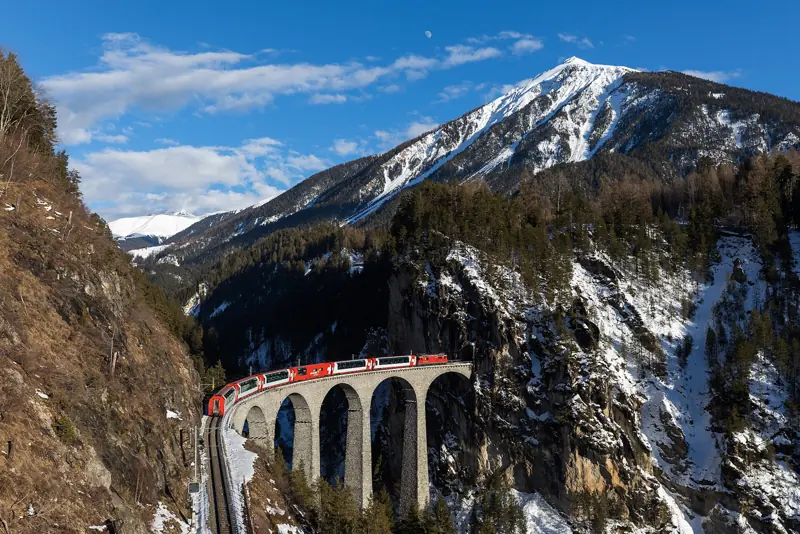
- Panoramic trains like the Glacier Express, Bernina Express and GoldenPass Express. The fare is covered, but seat reservations cost extra (CHF 54 on the full Glacier Express route).
- City transport in more than 90 towns and cities, including Zurich, Geneva, Bern, Basel and Lucerne.
- Free mountains: the Rigi, the Stanserhorn and Stoos.
- Museums: free entry to more than 500 museums.
What does the Swiss Travel Pass only discount?
Most famous Swiss mountains are discounted rather than free with the Swiss Travel Pass: the pass usually takes you to the valley station, and the mountain railway costs up to 50% less.
| Mountain | Covered by the pass | What you still pay |
|---|---|---|
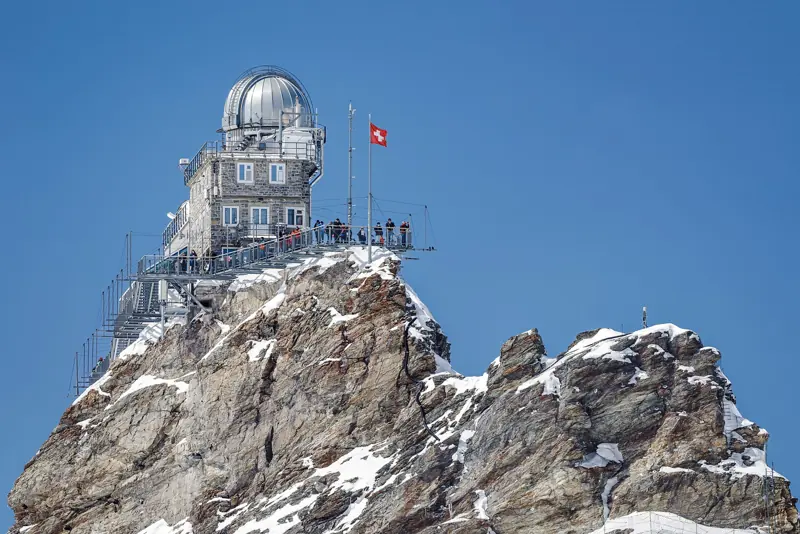
| Jungfraujoch | Trains to Grindelwald, Lauterbrunnen and Wengen | About 25% off the rest of the way (Half Fare Card: 50%) |
| Pilatus | Train or boat from Lucerne to Alpnachstad | Discount on the cogwheel railway or cable car |
| Titlis | Train from Lucerne to Engelberg | Discount on the cable cars |
| Schilthorn | Up to Mürren | Discount on the cable car to Piz Gloria |
| Gornergrat | Train to Zermatt | Discount on the Gornergrat Bahn |
The official rule is "up to 50% off many other mountain excursions"; the exact rate depends on the operator and can change, so check its site before you go.
Swiss Travel Pass or Half Fare Card?
The Swiss Half Fare Card costs CHF 150 (about $188) for one month, in 1st or 2nd class, and halves most train, bus, boat and mountain fares. It usually wins if you:
- stay in one or two bases, like Grindelwald or Lucerne, and do day trips;
- plan several expensive mountains (50% off most of them, including Jungfraujoch);
- are traveling for more than two weeks with few long train days.
The Swiss Travel Pass usually wins if you:
- change base every two or three days (for example Zurich → Lucerne → Interlaken → Zermatt);
- plan the Glacier Express or Bernina Express;
- want to hop on any train, tram or boat without thinking about tickets.
See our side-by-side comparison with two worked examples: Swiss Travel Pass vs Half Fare Card.
Do children travel free?
Children under 6 travel free in Switzerland. Children aged 6 to 15 travel free with the Swiss Family Card, which is free of charge, when at least one parent holds a Swiss Travel Pass or a Half Fare Card; children traveling without a parent pay 50% of the pass price.
Is the Swiss Travel Pass worth it in winter?
The Swiss Travel Pass is worth less in a ski week, because ski lifts are not included. It works well for a December trip built around the cities: Zurich, Basel, Bern, Lucerne and St. Gallen are 41 to 60 minutes apart by direct train, and city trams are included, so a Christmas market trip with three or four cities usually beats the daily break-even. For a ski holiday in one resort, the Half Fare Card plus a lift pass is usually cheaper; see our non-skier's guide to Swiss winter for trips in between.
Our take
For a typical first trip of 7 to 10 days with three bases, the 6- or 8-day pass in 2nd class is a good deal and makes travel effortless. If you're doing a slow hiking holiday from one base, skip it and buy the Half Fare Card.
Where to base yourself
Swiss trains make the whole country easy, so choose bases for what you want to do, not for transport. Our where to stay for hiking guide covers the best bases.
Victoria-Jungfrau Grand Hotel & Spa
Interlaken · Bern (Bernese Oberland)
Why we picked it: Interlaken's landmark grand hotel with a 5,500 m² spa.
Check rates & availability →Mandarin Oriental Palace, Luzern
Lucerne · Lucerne
Why we picked it: Restored lakefront palace hotel with a spa, walking distance to the old town.
Check rates & availability →Mont Cervin Palace
Zermatt · Valais
Why we picked it: Grand hotel in the center of car-free Zermatt with a large spa and indoor/outdoor pool.
Check rates & availability →Not sure how many days you need? Start with our Switzerland itinerary and budget guide.
Frequently asked questions
How much is the Swiss Travel Pass in 2026?
The official 2nd class prices are CHF 254 for 3 days, CHF 309 for 4 days, CHF 399 for 6 days, CHF 439 for 8 days and CHF 499 for 15 days. 1st class runs from CHF 405 to CHF 778, and the Youth pass (under 25) is 30% cheaper.
Is the Swiss Travel Pass worth it?
The Swiss Travel Pass is worth it when your full-fare tickets add up to more than the pass price divided by its days: about CHF 85 a day on a 3-day pass, CHF 67 on a 6-day pass and CHF 55 on an 8-day pass. That usually means a long train ride or a covered mountain most days.
What does the Swiss Travel Pass cover?
Trains, buses and boats on the Swiss Travel System network, public transport in more than 90 towns and cities, free entry to more than 500 museums, and the Rigi, Stanserhorn and Stoos. Panoramic trains are covered, but seat reservations cost extra, and most other mountain railways are up to 50% off.
Does the Swiss Travel Pass cover Jungfraujoch?
No. The Swiss Travel Pass covers the trains to Grindelwald, Lauterbrunnen, Wengen and Mürren, and gives about 25% off the rest of the way to Jungfraujoch. The Half Fare Card gives 50% off.
Do children travel free with the Swiss Travel Pass?
Children under 6 travel free. Children aged 6 to 15 travel free with the free Swiss Family Card when at least one parent holds a Swiss Travel Pass; without a parent they pay 50% of the pass price.