Short answer
US and Canadian citizens don't need a visa for Switzerland for stays of up to 90 days in any 180-day period across the Schengen area. Your passport must be valid at least 3 months beyond your departure date and issued within the last 10 years. ETIAS, the new online travel authorization, is not required yet: its launch has been postponed, so check the official EU site before you fly.
On this page 11 sections
The good news first: entering Switzerland on a US or Canadian passport is easy. No visa, no forms on the plane. But a few rules trip people up every season, and the paperwork for Europe is changing. Here's everything to sort out before you fly, plus the practical stuff nobody tells you until you're standing in Zurich station with the wrong plug.
Entry rules at a glance
| What | Rule (US and Canadian citizens) |
|---|---|
| Visa | Not needed for tourism |
| Maximum stay | 90 days in any 180-day period, across the whole Schengen area |
| Passport validity | At least 3 months beyond the day you leave the Schengen area |
| Passport age | Issued within the last 10 years |
| ETIAS | Not required yet (launch postponed) |
| EES | Biometric registration at your first Schengen border |
Passport: the two dates to check
Switzerland isn't in the EU, but it is in the Schengen area, so the Schengen passport rules apply:
- Expiry date: at least three months after the day you plan to leave Schengen. Many airlines want to see this at check-in, not just the border officer.
- Issue date: less than 10 years before you enter. This catches people whose passports were extended or who have an old passport with a long validity.
The 90/180-day rule
You can spend up to 90 days within any rolling 180 days in the Schengen area. Days in France, Italy, Germany or Austria count toward the same total. For a two-week vacation this never matters, but it does for long trips that combine Switzerland with the rest of Europe.
EES and ETIAS: what's changing
Two new systems are coming to Europe's borders, and Switzerland takes part in both:
- EES (Entry/Exit System) replaces passport stamps with a digital record. At your first entry into Schengen, you may be asked to scan your passport and give fingerprints and a photo at a kiosk or desk. It's free and takes a few extra minutes; just allow more time at the airport.
- ETIAS is an online travel authorization, similar to the US ESTA, that visa-free visitors will need to apply for before traveling. It was planned for late 2026, but the launch has been delayed again and no firm start date had been announced as of October 2026. You don't need it yet. When it does start, apply only on the official EU site (travel-europe.europa.eu). Many look-alike sites charge extra fees.
Travel advisory: is Switzerland safe?
Very. The US State Department rates Switzerland Level 1: Exercise Normal Precautions, its lowest level, and Canada's advice is similar. Two things to keep in mind:
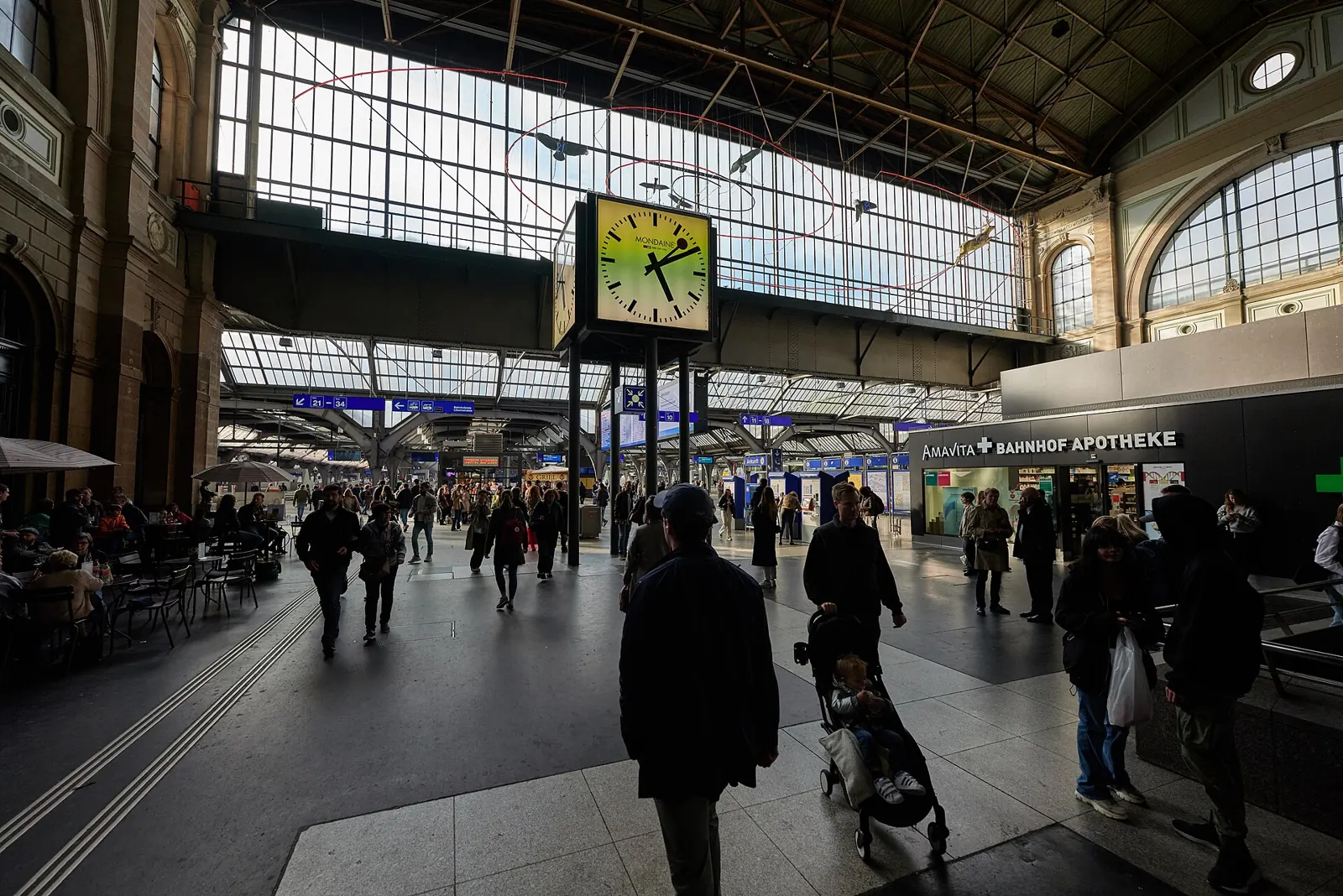
- Pickpockets work busy stations, trams and city centers, Geneva and Zurich in particular. Keep your phone and wallet zipped away in crowds.
- The mountains are the real risk. Weather turns fast, and rockfall, avalanches and crevasses are year-round hazards above the tree line. Stay on marked trails, check the forecast and avalanche bulletin, and turn back early.
Check travel.state.gov (or travel.gc.ca) for the live advisory before you fly.
Money: francs, cards and tipping
- Currency: Swiss franc (CHF). One franc is worth a bit more than a US dollar (around $1.23–1.25 in 2026).
- Cards: Visa and Mastercard work almost everywhere, including trains, cable cars and most mountain restaurants. Apple Pay and Google Pay are common. American Express is accepted less often.
- Cash: you'll rarely need it. Keep CHF 50 for farm stands, rural huts and honesty boxes along hiking trails.
- Euros: accepted in some places, but you'll get change in francs at a poor rate.
- Tipping: service is included. Round up, or add 5–10% for great service.
Wondering how far your money goes? See Is Switzerland expensive? for daily budgets.
Plugs, phones and Wi-Fi
- Plugs: Type J, 230 V. Slim two-pin European plugs fit; US and Canadian plugs don't. Bring a Swiss adapter (or a universal one that includes Type J). Check that your hair dryer or straightener is dual-voltage.
- Phone: most US and Canadian plans offer an international day pass. An eSIM for Switzerland is usually cheaper for longer trips. Note that EU roaming deals don't always include Switzerland, since it isn't in the EU.
- Wi-Fi: free in most hotels, at SBB train stations (after a short registration) and in many cafés.
Getting around
You almost certainly won't need a car. Trains, buses, boats and mountain railways connect everything, and timetables are synced so connections work. Download the SBB Mobile app for tickets and live platforms. Our Swiss Travel Pass guide explains whether a pass is worth it for your route.
If you do rent a car, Swiss motorways require a vignette (a road-tax sticker or e-vignette), CHF 40 for the calendar year. Rental cars from Swiss agencies come with one.
Small things worth knowing
- Sundays are quiet. Most shops close, except at big train stations and airports, which stay open. Stock up on Saturday.
- Tap water is excellent and free. Village fountains are drinkable unless a sign says otherwise.
- Quiet hours are taken seriously in apartments and small hotels, usually from 10 p.m.
- Mountain weather changes fast. Even on a summer day, pack a warm layer and a rain jacket for any trip above 2,000 m (6,500 ft).
- Languages: German, French, Italian and Romansh, depending on the region. English is widely spoken in tourist areas, but "Grüezi" (German side) or "Bonjour" (French side) goes a long way.
Your next steps
With paperwork sorted, pick your route: our 7, 10 and 14-day itineraries are a good place to start, then check when to go. Everything is linked from the Switzerland planning hub.
B2 Boutique Hotel + Spa
Zurich · Zurich
Why we picked it: Hotel inside the old Hürlimann brewery, connected to the thermal baths.
Check rates & availability →The Dolder Grand
Zurich · Zurich
Why we picked it: Hilltop grand hotel with a 4,000 m² spa above the city.
Check rates & availability →Frequently asked questions
Do US citizens need a visa for Switzerland?
No. US and Canadian passport holders can visit Switzerland visa-free for up to 90 days in any 180-day period. That limit is shared with the rest of the Schengen area, so days in France or Italy count too.
Do I need ETIAS to visit Switzerland?
Not yet. ETIAS will apply to Switzerland once it launches, but the start date has been pushed back several times and no firm date was confirmed as of October 2026. Check travel-europe.europa.eu before your trip.
What is the travel advisory for Switzerland?
The US State Department rates Switzerland Level 1, Exercise Normal Precautions, the lowest level. The main risks are pickpocketing in busy stations and city centers, and natural hazards in the mountains. Check travel.state.gov for the current rating.
What plug do I need in Switzerland?
Switzerland uses Type J sockets at 230 volts. Slim two-pin European (Type C) plugs fit too. US and Canadian plugs don't, so bring an adapter; most phone and laptop chargers handle 230 V without a converter.
Do you tip in Switzerland?
Service is included by law in Swiss prices, so tipping is optional. Rounding up or leaving a few francs (about 5–10%) for good service is common and appreciated.
Can I use euros in Switzerland?
The currency is the Swiss franc (CHF). Some stations and shops accept euros, but at a poor rate and with change in francs. Pay by card instead.