Short answer
Switzerland is easy to cross by train, and the timetable runs to the minute: the SBB app gives you tickets and platforms, the Swiss Travel Pass covers most trains, boats and buses, and a Saver Day Pass is the cheapest single-day option, from CHF 29 with a Half Fare card. Zurich airport to Lucerne takes about an hour, Interlaken to Zermatt about 2 hours 15 minutes with a change, and the Glacier Express needs a seat reservation.
On this page 6 sections
Switzerland is one of the easiest countries in Europe to cross without a car. The network is dense, the trains are punctual, and the timetable is built on a clock-face pattern: many routes leave at the same minute each hour, so you can plan a day from memory once you have seen one board. The catch is that the mountains are slow. A route that looks short on the map can take two hours and a change.
This guide covers what you need to know before you buy a ticket and how the main routes work, so you can compare them with our classic Switzerland itinerary.
The SBB app: start here
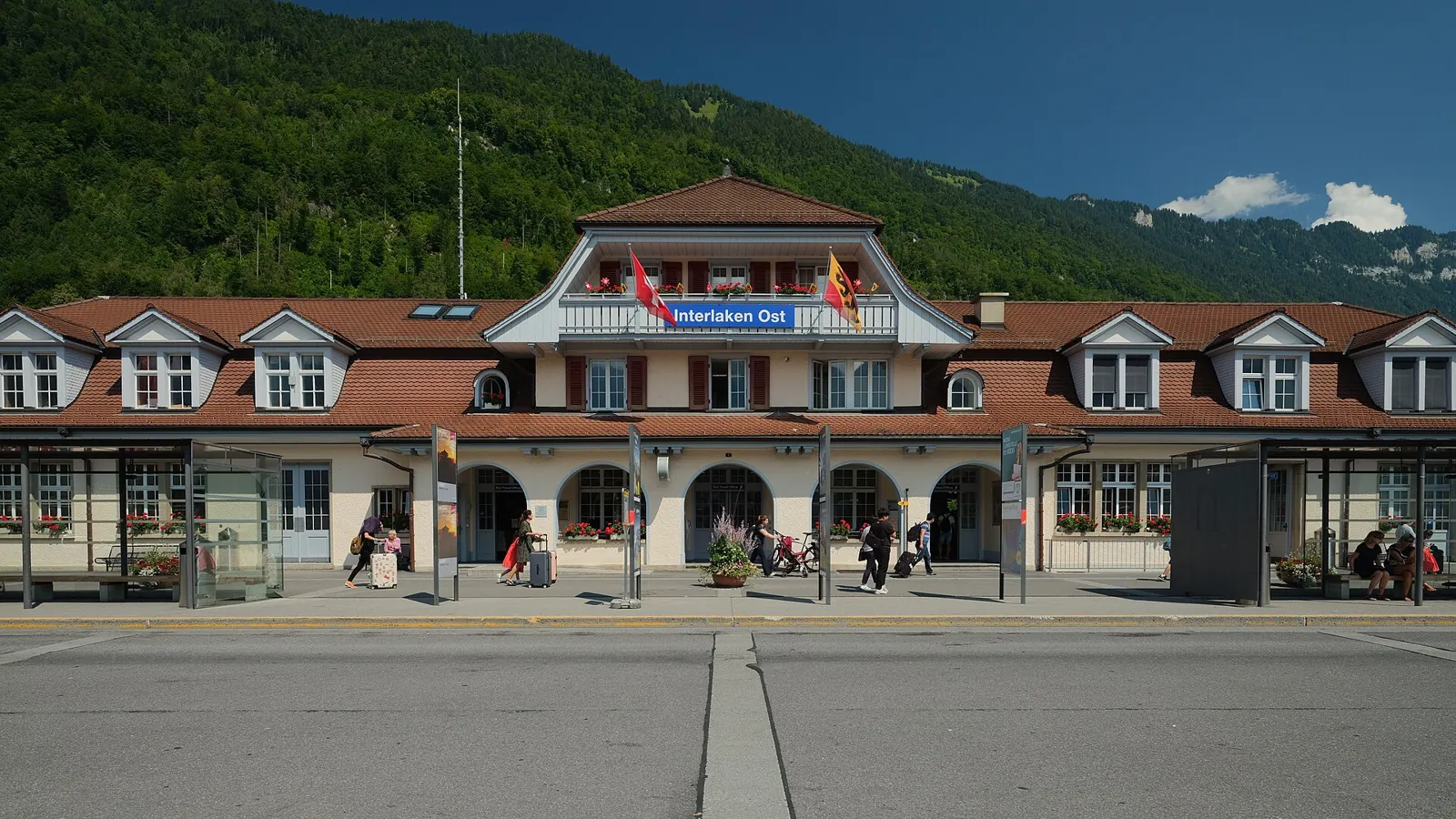
Download the SBB app before you arrive. It gives you timetables, platform numbers and live delays, and it sells mobile tickets for most point-to-point journeys. Check the departure board at a big station such as Zurich HB, Lucerne or Interlaken Ost, since platforms are not always the ones the app shows first.
Some connections are very short, often only a few minutes. If your trip has a change, take the train that arrives first and check the platform on the board rather than walking to where you think it is.
Pick the right ticket
There are four common options, and most visitors need one of the first two.
| Ticket | Best for | Notes |
|---|---|---|
| Swiss Travel Pass | Several days of travel, with boats and mountain railways | Covers most trains, buses and boats, and gives discounts on many mountain railways. Our pass guide explains the options. |
| Half Fare card (Halbtax) | Trips where you buy point-to-point tickets | Gives half price on most standard fares. Adults pay about CHF 190 for a year at the regular price, and the price rises with the December 2026 timetable change. |
| Saver Day Pass | One day, a long round trip | Quota-limited and valid only on the date you pick. From CHF 29 with a Half Fare card, or from CHF 52 without. |
| Point-to-point ticket | A single journey or two | Buy in the SBB app or at a station machine. Choose English on the screen. |
The Half Fare card and the Saver Day Pass combine well if you plan one or two long days out. Our Swiss Travel Pass vs Half Fare card comparison works through the numbers.
The main routes, with rough times
These times are rough guides, not timetables. Check the SBB app before you travel.
- Zurich airport to Lucerne: about an hour, with direct trains through the day.
- Zurich main station to Lucerne: about 40 to 50 minutes.
- Lucerne to Interlaken: a scenic route over the Brünig Pass. Check the journey time in the app, since it varies by train.
- Interlaken Ost to Zermatt: about 2 hours 15 minutes, with a change at Visp. Published travel times range from about 2 hours to 2 hours 30 minutes, so allow a little extra.
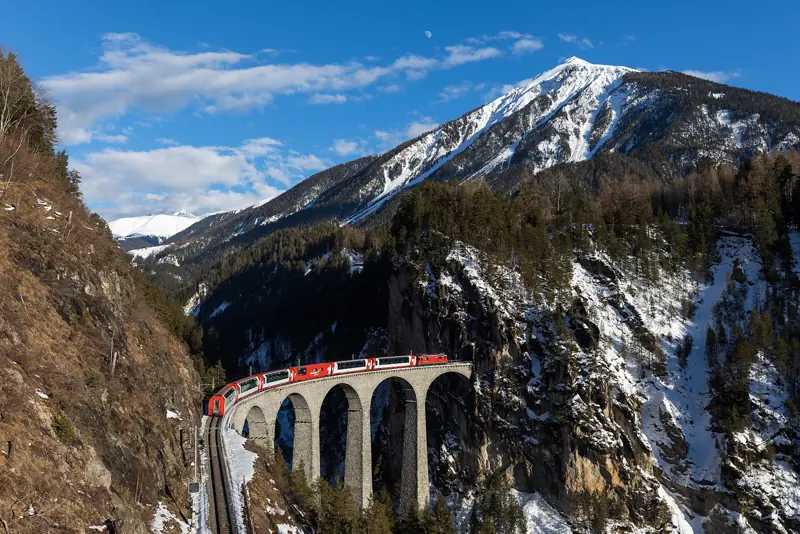
- Zermatt to St. Moritz on the Glacier Express: about eight hours. The summer timetable for 2026 ran from 2 May to 10 October, and the train did not run from 11 October to 4 December. Our Glacier Express guide covers the route and the reservation.
Things that catch first-time visitors
- Seat reservations. The Glacier Express needs one. Other panoramic trains may not, so check the rule for your train before you buy.
- Mountain railways. Many routes to the high peaks run on separate railways, which are not all covered by the same ticket. Check the discount rules before you go up.
- Car-free villages. Zermatt, Wengen and Mürren are car-free. Your luggage will need to be carried from the station, by a porter or an electric taxi, so pack light for the last stretch.
- Luggage. SBB runs a luggage service between stations, hotels and Zurich airport. Pass holders sometimes get a discount in the autumn, so check the SBB luggage shop for the current price. The discount amounts vary between sources, so do not plan around a specific figure until you see it on the site.
How to plan a train day
Start from the mountain, not the station. Check where the last train back down leaves, then work back: a day that ends at a mountain station needs the last cable car and the last train timed to it, and those last times change with the season. Our best time to visit Switzerland guide shows which mountain lifts are open month by month.
If you're building a whole trip, the planning hub links every route guide, from Zurich and Geneva to the Jungfrau region.
Frequently asked questions
Do I need a train pass in Switzerland?
Not always. If you visit one region and make only a few journeys, point-to-point tickets are often cheaper. A pass pays off when you cross the country several times, use boats and mountain railways, or make two or three long day trips. Compare the pass price against your own route before you buy.
Is the SBB app useful for tourists?
Yes. It shows timetables, platform numbers and live delays, and it sells mobile tickets. Download it before you arrive and check that your pass or ticket is attached to it.
Do I need a seat reservation for the Glacier Express?
Yes. A seat reservation is mandatory on the Glacier Express, so book it when you buy your ticket, especially for July and August.
How long does the train from Zurich airport to Lucerne take?
About an hour. Trains from Zurich main station to Lucerne take roughly 40 to 50 minutes, so the airport is a few minutes longer.
Can I take luggage by train in Switzerland?
Yes. SBB runs a luggage service that moves bags between stations, hotels and the airport. Book it in the SBB luggage shop, and check the current price, since pass holders sometimes get a discount.
![[Tycho] talk , http://shansov.net](https://commons.wikimedia.org/wiki/File:Interlaken_Ost.jpg)