Swiss Wander

Interactive guide

Discover Switzerland: Regions & History

Short answer

Switzerland packs 12 very different travel regions into just 41,000 km² (16,000 sq mi): the Bernese Oberland and Valais for the big Alps, Vaud, Geneva and Lake Lucerne for lakeside towns, Graubünden for St. Moritz and scenic trains, and Italian-speaking Ticino for palm trees. Tap a region on the map to see why it's worth the trip.

Switzerland by region

Tap a region to open its card: why go, what not to miss, the best season and where to soak.

🏔️ Bernese Oberland⛷️ Valais🚂 Graubünden🌴 Ticino🍇 Vaud⛲ Geneva⛴️ Lake Lucerne🏙️ Zurich🐄 Eastern Switzerland🎨 Basel🧀 Fribourg⌚ Jura

A short history of Switzerland

From the Romans to the world's longest rail tunnel, in 14 moments. Each one links to where you can still see it.

  1. Julius Caesar defeats the Helvetii, a Celtic people trying to migrate west. The region becomes part of the Roman Empire for four centuries, with towns like Aventicum and Augusta Raurica.

    See it today The Roman amphitheatre of Avenches and the ruins of Augusta Raurica near Basel. Show Basel on the map →

  2. Uri, Schwyz and Unterwalden seal a defensive pact in early August 1291. Switzerland counts this Federal Charter as its founding, and August 1 is now the National Day.

    See it today The original charter at the Bundesbriefmuseum in Schwyz, and the Rütli meadow on Lake Lucerne. Show Lake Lucerne on the map →

  3. Swiss troops are defeated by France near Milan. The loss ends the Confederation's expansion and starts its long tradition of staying out of European wars.

    See it today Ticino, the Italian-speaking land the Swiss kept south of the Alps. Show Ticino on the map →

  4. Huldrych Zwingli begins preaching at Zurich's Grossmünster and leads the Reformation in Zurich. Geneva follows in the 1530s and becomes Calvin's city.

    See it today The Grossmünster in Zurich, and the Reformation Wall in Geneva's Parc des Bastions. Show Zurich on the map →

  5. The Peace of Westphalia formally recognizes the Swiss Confederation as independent of the Holy Roman Empire.

    See it today Bern's UNESCO-listed old town: Bern was then the most powerful canton of the Confederation. Show Bernese Oberland on the map →

  6. Revolutionary France invades and imposes a centralized Helvetic Republic. It doesn't last, but it brings ideas like equality before the law.

    See it today Ticino and Vaud, which became full cantons in 1803 after the Helvetic Republic ended. Show Vaud on the map →

  7. The Congress of Vienna recognizes Swiss neutrality. Geneva, Valais and Neuchâtel join the Confederation.

    See it today Geneva, today home to the United Nations' European headquarters. Show Geneva on the map →

  8. After a short civil war in 1847, a new constitution creates today's federal state, with Bern as the federal city.

    See it today The Federal Palace in Bern, with free guided tours. Show Bernese Oberland on the map →

  9. Inspired by Henry Dunant, the International Committee of the Red Cross is founded in Geneva. The first Geneva Convention follows in 1864.

    See it today The International Red Cross and Red Crescent Museum in Geneva. Show Geneva on the map →

  10. A 15 km rail tunnel under the Gotthard links northern Switzerland with Ticino and Italy, one of the great engineering feats of its time.

    See it today The Gotthard Pass and its cobbled Tremola road in summer. Show Lake Lucerne on the map →

  11. After 16 years of work through the Eiger, the Jungfrau Railway reaches Jungfraujoch at 3,454 m, still the highest railway station in Europe.

    See it today Jungfraujoch, via Grindelwald or Wengen. Show Bernese Oberland on the map →

  12. Swiss women win the right to vote in federal elections. The last canton, Appenzell Innerrhoden, is ordered by the Federal Court to follow in 1990.

    See it today Appenzell, where people still vote by show of hands at the open-air Landsgemeinde each spring. Show Eastern Switzerland on the map →

  13. After a popular vote, Switzerland joins the UN, decades after Geneva became one of its main seats.

    See it today The Palais des Nations in Geneva. Show Geneva on the map →

  14. The Gotthard Base Tunnel opens: 57 km under the Alps, the longest railway tunnel in the world, cutting Zurich–Lugano journeys by about half an hour.

    See it today Ride a train from Zurich to Lugano, then come back over the old line for the views. Show Ticino on the map →

All 12 regions at a glance

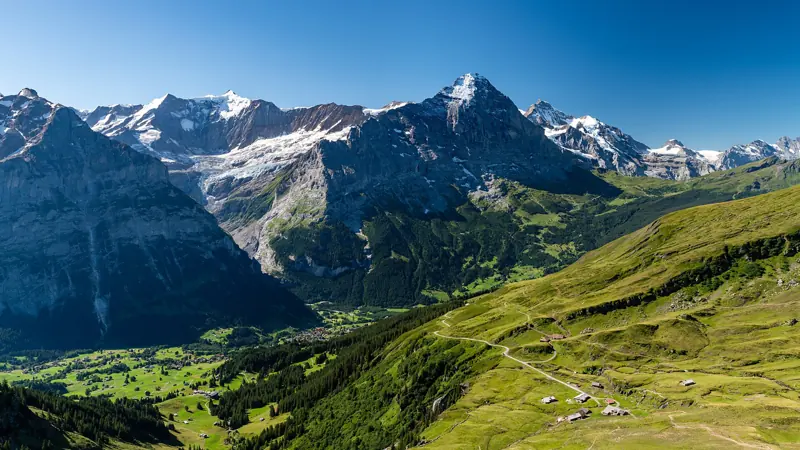
Grindelwald and the Eiger in the Bernese Oberland
Photo: Christoph Strässler from Oberdorf BL, Schweiz, CC BY-SA 2.0

Bern

Bern & the Bernese Oberland

The Eiger, Mönch and Jungfrau, waterfall valleys and the Swiss capital.

This is the Alps from the postcards: Grindelwald under the Eiger's north face, the Lauterbrunnen valley with its 72 waterfalls, and the railway to Jungfraujoch, the highest station in Europe. Bern, with its arcaded old town, is a UNESCO World Heritage site an hour away.

  • Jungfraujoch, Top of Europe
  • Lauterbrunnen & car-free Mürren
  • Oeschinensee above Kandersteg
  • Bern's arcaded old town
Best for
First trips, hiking, mountain railways
When to go
June–September for hiking; December–March for snow

Soak after Victoria-Jungfrau Grand Hotel & Spa, Interlaken

See hotels in Bernese Oberland →

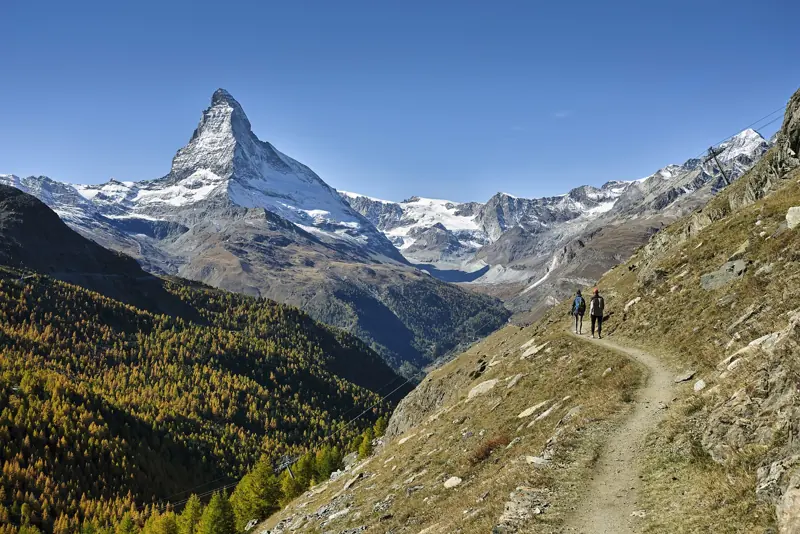
The Matterhorn above Zermatt, Valais
Photo: Roy Egloff, CC BY-SA 4.0

Valais

Valais

The Matterhorn, most of Switzerland's 4,000 m peaks and the hottest thermal water.

Valais is the high country: Zermatt and the Matterhorn, glacier skiing late into spring and the Aletsch, the longest glacier in the Alps. Down in the Rhône valley you'll find vineyards and Leukerbad, the biggest thermal resort in the Alps.

  • Zermatt & the Gornergrat
  • Five Lakes Walk with Matterhorn reflections
  • Aletsch Glacier (UNESCO)
  • Leukerbad's outdoor thermal pools
Best for
Hiking, skiing, thermal baths
When to go
All year: hiking June–September, skiing November–April

Soak after Leukerbad Therme, Leukerbad

See hotels in Valais →

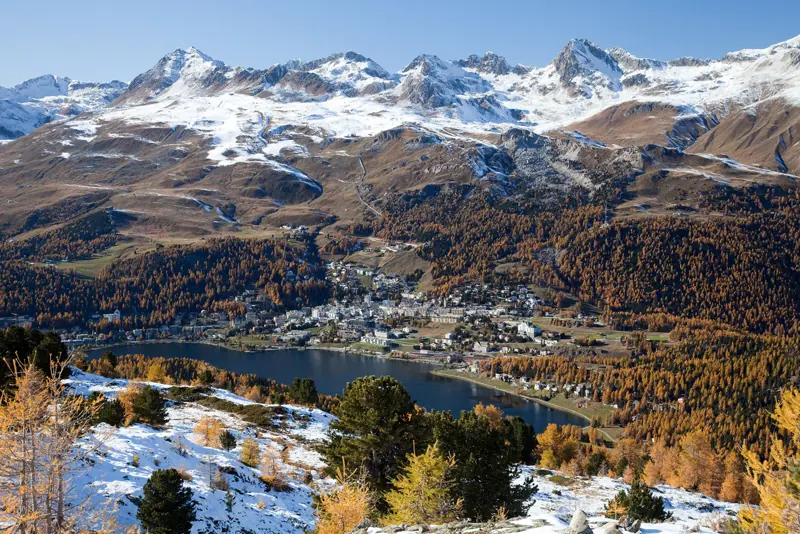
St. Moritz in the Engadine, Graubünden
Photo: Murdockcrc, CC BY 3.0

Graubünden

Graubünden

St. Moritz, the sunny Engadine and Switzerland's only national park.

Switzerland's largest canton feels like a country of its own, with three languages including Romansh. Come for St. Moritz and the Engadine lakes, the Swiss National Park, Peter Zumthor's stone baths at Vals, and the UNESCO-listed Albula and Bernina railway lines.

  • St. Moritz & the Engadine lakes
  • Therme Vals
  • Swiss National Park
  • Bernina Express
Best for
Skiing, scenic trains, spas
When to go
December–March for skiing; June–September for lakes and hiking

Soak after Therme Vals, Vals

See hotels in Graubünden →

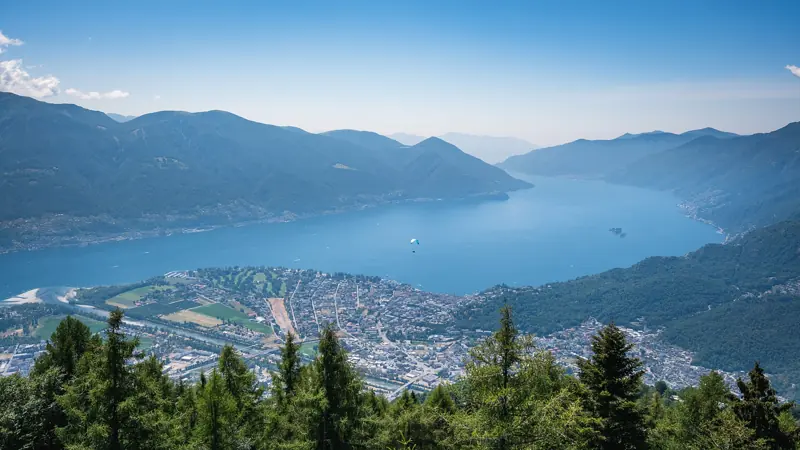
Ascona on Lake Maggiore, Ticino
Photo: Christian David, CC BY-SA 4.0

Ticino

Ticino

Italian-speaking Switzerland: palm trees, lakes and stone villages.

Cross the Gotthard and everything changes: the language turns Italian, the climate milder and the espresso better. Base yourself on Lake Lugano or Lake Maggiore, visit the castles of Bellinzona (UNESCO), and swim in the clear green river of the Verzasca valley.

  • Lugano's lakefront
  • Ascona & Locarno on Lake Maggiore
  • Castles of Bellinzona
  • Verzasca valley
Best for
Lakes, food, spring and autumn trips
When to go
March–October

Soak after Castello del Sole, Ascona

See hotels in Ticino →

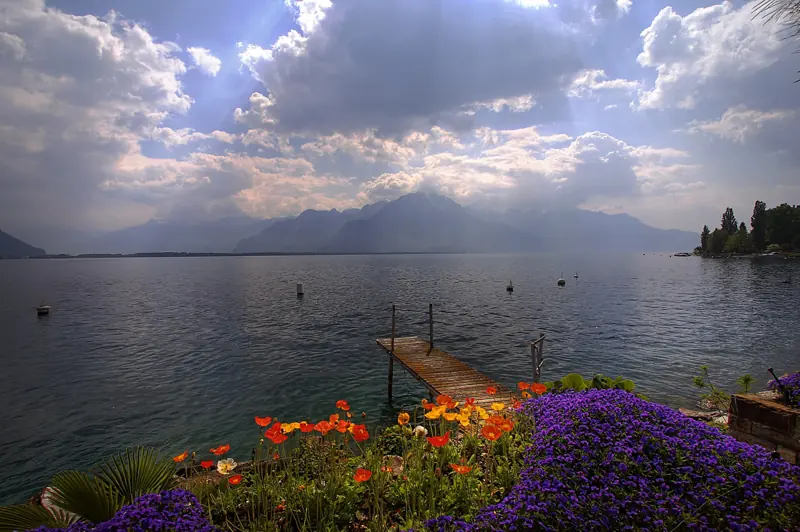
Lavaux vineyards above Lake Geneva, Vaud
Photo: Eric Hill, CC BY-SA 2.0

Vaud

Vaud & the Lake Geneva Region

Lausanne, the Lavaux vineyards, Montreux, Chillon and the Vaud Alps.

The canton of Vaud runs from the north shore of Lake Geneva up into the Alps. Lausanne climbs steeply from the lake, the Lavaux wine terraces (UNESCO) lead to the belle-époque promenade of Montreux and the Château de Chillon, and above them are the mountain villages of the Vaud Alps, such as Villars and Les Diablerets. To the north lie the watchmaking Vallée de Joux and Yverdon-les-Bains, with its thermal baths.

  • Lavaux wine terraces
  • Château de Chillon
  • Lausanne's old town & cathedral
  • The Vaud Alps: Villars, Les Diablerets
Best for
Food and wine, lakes, culture, mountain weekends
When to go
April–October; December for Montreux Noël; winter in the Vaud Alps

Soak after Lavey-les-Bains, Lavey

See hotels in Vaud →

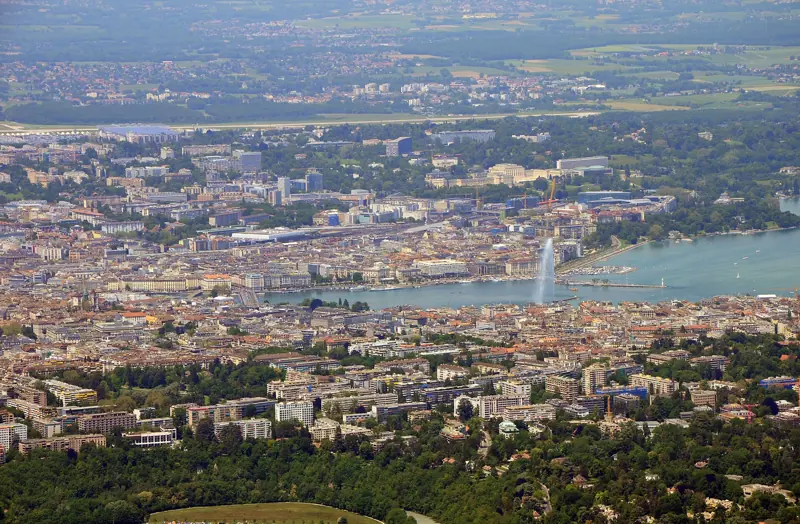
Geneva harbor and the Jet d'Eau
Photo: Gzzz, CC BY-SA 3.0

Geneva

Geneva

The international city on the lake: the Jet d'Eau, the old town and the UN.

At the tip of Lake Geneva and almost surrounded by France, Geneva is home to the United Nations' European headquarters and the Red Cross. Climb up to the old town and St. Pierre Cathedral, watch the Jet d'Eau from the harbor, and in summer swim at the Bains des Pâquis.

  • The Jet d'Eau
  • Old town & St. Pierre Cathedral
  • Palais des Nations & Red Cross Museum
  • Bains des Pâquis
Best for
City breaks, culture, first or last night
When to go
All year; December for Christmas markets

Soak after La Réserve Genève, Bellevue

See hotels in Geneva →

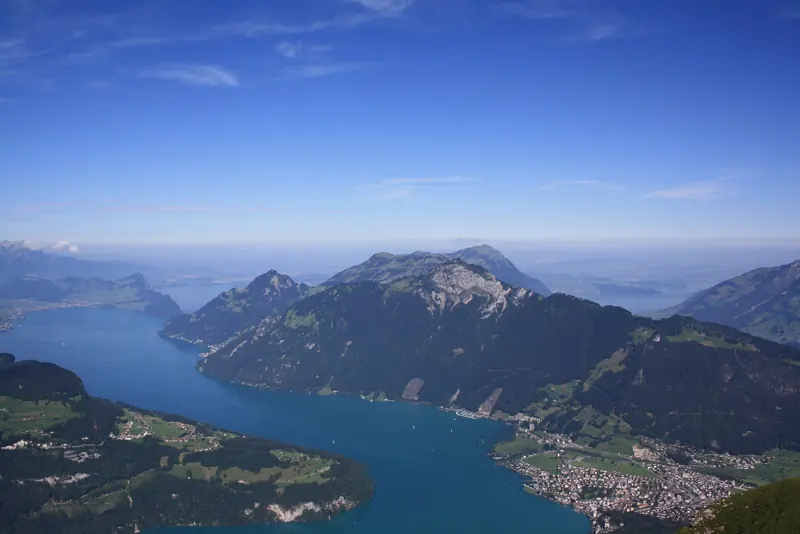
Lake Lucerne seen from Mount Rigi
Photo: Badener, CC BY-SA 3.0

Lucerne, Uri, Schwyz, Obwalden, Nidwalden, Zug

Central Switzerland & Lake Lucerne

Where Switzerland began: Lake Lucerne ringed by Rigi, Pilatus and Titlis.

The founding cantons of Switzerland surround Lake Lucerne, and the Rütli meadow on its shore is where that alliance is remembered. Today paddle steamers link Lucerne to the cogwheel railway up the Rigi, the Stoos funicular, the steepest in the world, and Engelberg's Titlis.

  • Lucerne's Chapel Bridge
  • Rigi, the queen of the mountains
  • Stoos Ridge hike
  • Andermatt
Best for
First trips, lake cruises, easy mountains
When to go
All year

Soak after Rigi Kaltbad Mineral Baths & Spa, Rigi Kaltbad

See hotels in Lake Lucerne →

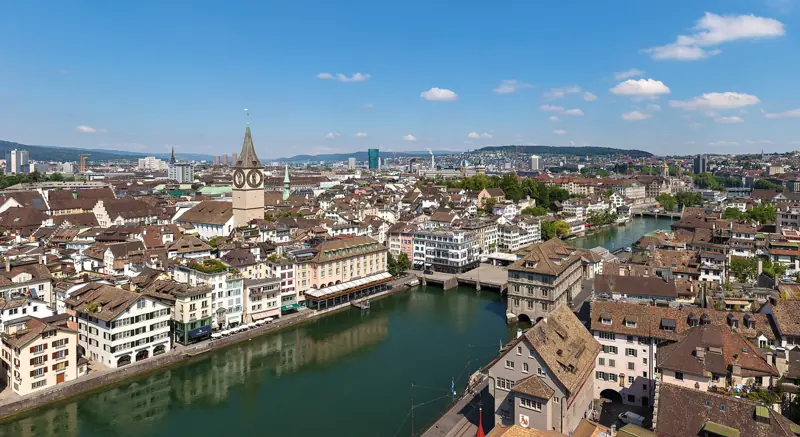
Zurich old town along the Limmat river
Photo: Thomas Wolf, www.foto-tw.de, CC BY-SA 3.0 de

Zurich

Zurich Region

Switzerland's largest city: old town lanes, lake swims and great museums.

Most trips start here. Zurich has a compact old town on the Limmat, lake and river baths in summer, the Kunsthaus, and the Uetliberg twenty minutes away by train. After a long flight, try the rooftop thermal pool in a former brewery.

  • Old town & Grossmünster
  • Lake Zurich & river baths
  • Uetliberg
  • Rhine Falls day trip
Best for
City breaks, first and last nights
When to go
All year; Christmas markets in December

Soak after Thermalbad & Spa Zürich, Zurich

See hotels in Zurich →

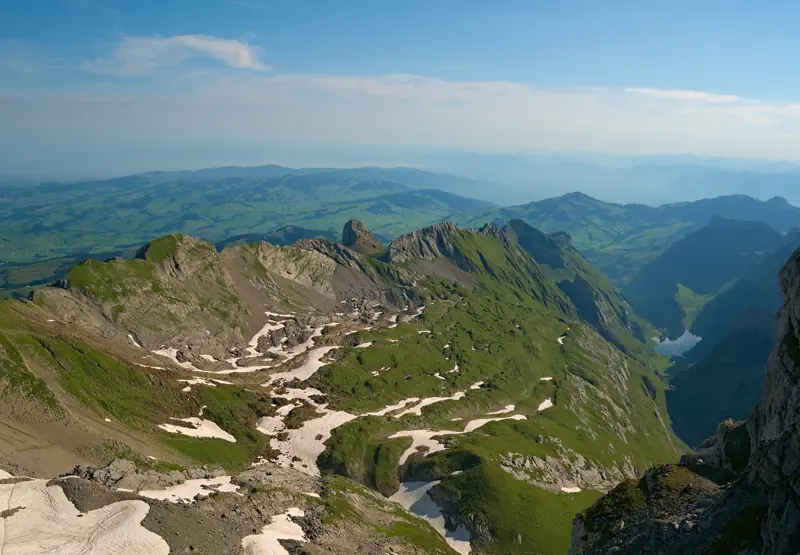
Seealpsee lake in the Alpstein, Appenzell
Photo: Daniel Kraft, CC BY-SA 3.0

St. Gallen, Appenzell Ausserrhoden, Appenzell Innerrhoden, Thurgau, Schaffhausen, Glarus

Eastern Switzerland

Green hills, the Säntis, the Rhine Falls and Bad Ragaz's thermal springs.

This is the least crowded corner of the country and very green. Visit the abbey library of St. Gallen (UNESCO), Appenzell's painted houses and the Alpstein trails to the Seealpsee, and the Rhine Falls, among the most powerful waterfalls in Europe. Finish in the Tamina gorge's thermal water at Bad Ragaz.

  • St. Gallen abbey district
  • Appenzell & the Seealpsee
  • Rhine Falls
  • Bad Ragaz thermal spa
Best for
Off the beaten path, hiking, spas
When to go
May–October; December for St. Gallen's market

Soak after Tamina Therme, Bad Ragaz

See hotels in Eastern Switzerland →

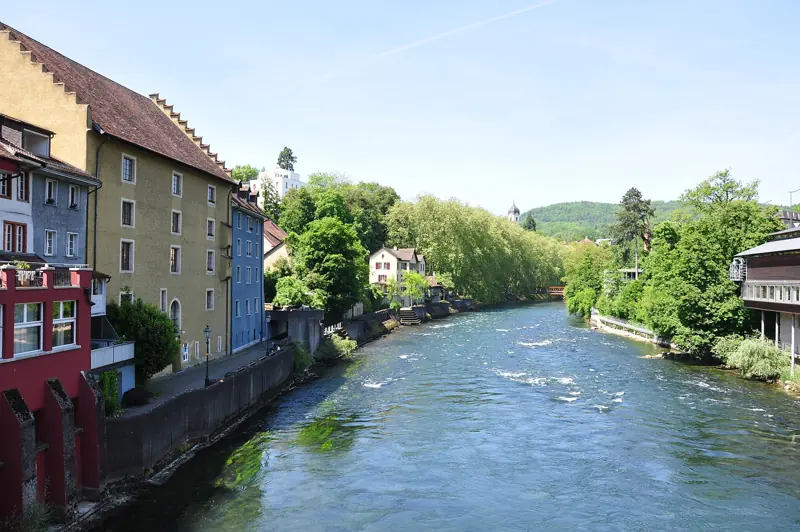
Baden's old town on the Limmat, Aargau
Photo: Roland zh, CC BY-SA 3.0

Basel-Stadt, Basel-Landschaft, Aargau, Solothurn

Basel & Northwest Switzerland

Basel's museums, swimming in the Rhine and Roman spa towns.

Basel is a museum city on the Rhine, where locals float downstream in summer, and its Christmas market is one of the best in the country. Nearby Baden has been a spa town since Roman times, and Rheinfelden is known for its saltwater baths.

  • Basel's old town & museums
  • Swimming down the Rhine
  • Baden's thermal springs
  • Rheinfelden's brine baths
Best for
Culture, city breaks, thermal baths
When to go
All year; summer for the Rhine

Soak after FORTYSEVEN, Baden

See hotels in Basel →

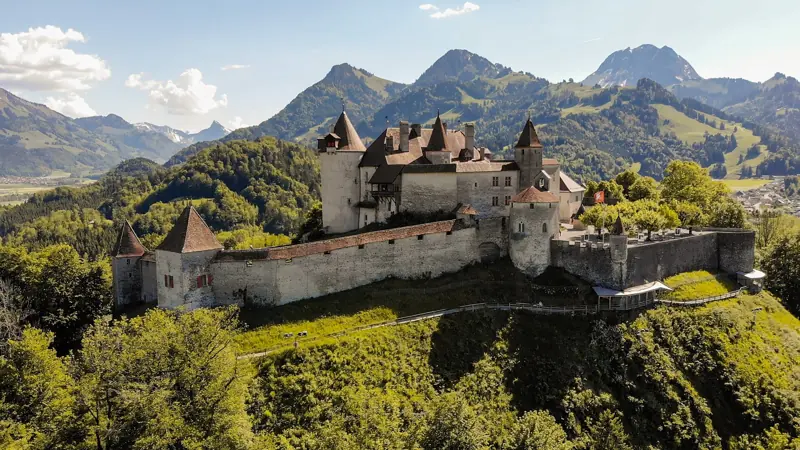
The medieval town of Gruyères, Fribourg
Photo: Giles Laurent, CC BY-SA 4.0

Fribourg

Fribourg Region

Gruyères castle, cheese and chocolate, on the language border.

Fribourg straddles the border between French- and German-speaking Switzerland. Gruyères is a car-free medieval town with a castle and a cheese dairy. The Cailler chocolate factory is in Broc, and the Bains de la Gruyère in Charmey are a short drive away.

  • Gruyères castle & cheese dairy
  • Maison Cailler chocolate factory
  • Fribourg's old town
  • Bains de la Gruyère
Best for
Food, families, a day off the main route
When to go
All year

Soak after Les Bains de la Gruyère, Charmey

See hotels in Fribourg →

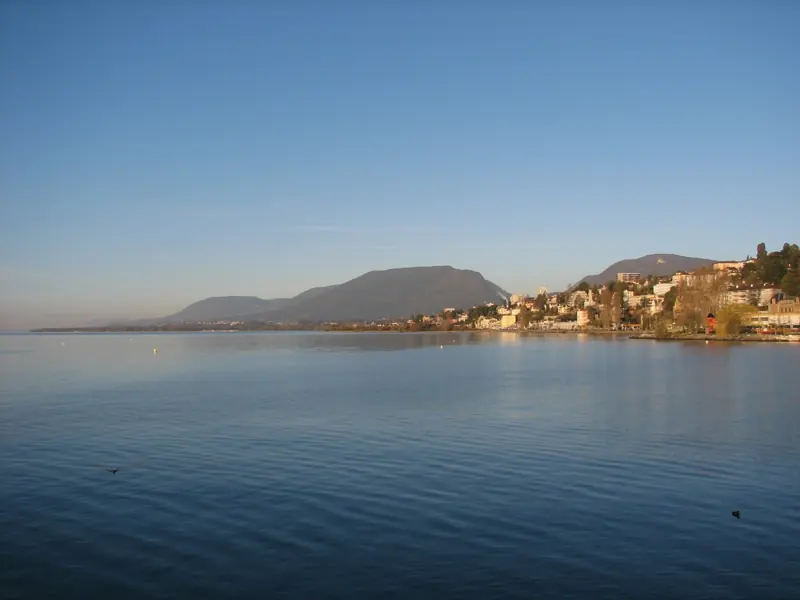
Neuchâtel on Lake Neuchâtel
Photo: Unknown, Public domain

Jura, Neuchâtel

Jura & Three Lakes

Watchmaking towns, quiet lakes and the Creux du Van.

The Jura arc is Switzerland's watchmaking heartland, and La Chaux-de-Fonds and Le Locle are UNESCO-listed for their watchmaking town plans. Add Lake Neuchâtel, the giant rock amphitheatre of the Creux du Van, and wide, quiet trails far from the crowds.

  • La Chaux-de-Fonds & Le Locle
  • Creux du Van
  • Lake Neuchâtel
  • Doubs river
Best for
Quiet hiking, design and watchmaking
When to go
May–October

Soak after Grand Hôtel Les Endroits, La Chaux-de-Fonds

See hotels in Jura →

Ready to plan? Start with our 7, 10 or 14-day itineraries and the planning guide.