Short answer
Zermatt is car-free, so almost everyone arrives by train, changing at Visp: about 3 hours 15 minutes from Zurich main station, about 3.5 hours from Zurich Airport and about 4 hours from Geneva Airport. Drivers park in Täsch, 5 km below the village, and take the shuttle train, which runs every 20 minutes and takes 12 minutes. The closest airport with regular international flights is Geneva or Zurich.
On this page 11 sections
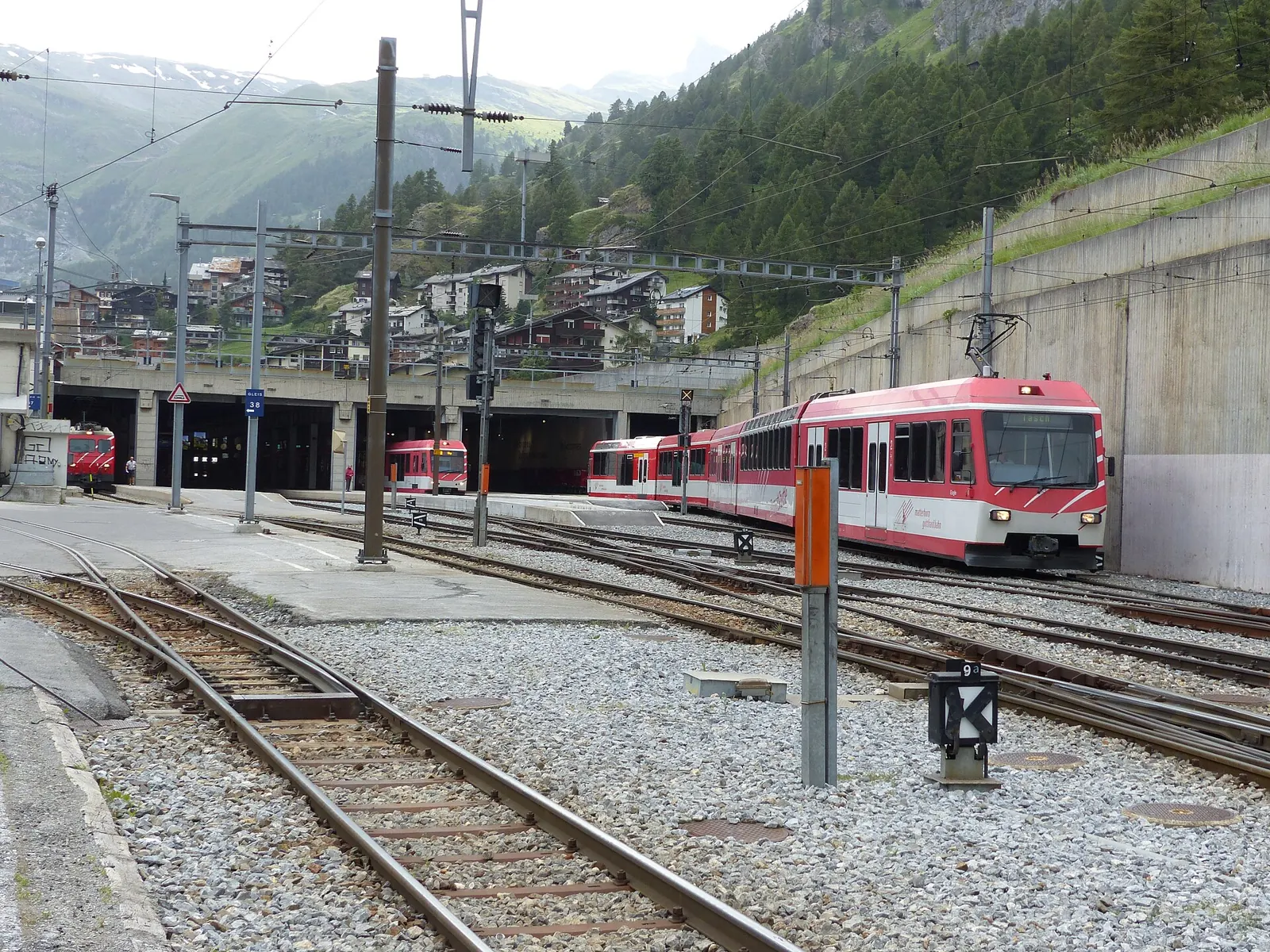
Zermatt sits at the end of a narrow valley in the Valais, and no private cars are allowed in the village. That sounds complicated, but it makes the trip simpler: every route ends on the same red train of the Matterhorn Gotthard Railway, which runs up the valley from Visp about every half hour. The only real decisions are which airport to fly into and whether to arrive by train or by car.
Getting to Zermatt at a glance
| From | By train | Changes | Notes |
|---|---|---|---|
| Zurich HB | About 3 h 15 min | Visp | Via the Lötschberg Base Tunnel |
| Zurich Airport | About 3 h 30 min | Visp (sometimes also Bern or Zurich HB) | Station under the airport |
| Geneva Airport | About 4 h | Visp | Trains along Lake Geneva and up the Rhône valley |
| Basel | About 3 to 3.5 h | Visp | Via Bern |
| Interlaken Ost | About 2 h 15 min to 2 h 45 min | Spiez, Visp | Hourly |
| St. Moritz (Glacier Express) | About 8 h | None | Seasonal, seat reservation required |
Times are typical daytime connections. Check the SBB app for your date, since works occasionally add a bus section.
The closest airport to Zermatt
Sion is the closest airport, about 85 km (53 mi) away by road, but it has very few scheduled flights and none from outside Europe. For almost every trip, the real choice is between Zurich and Geneva.
Zurich Airport is the main hub for flights from North America, and the train station is right under the terminal. Expect about 3.5 hours to Zermatt, with a change at Visp and, depending on the connection, a first change at Zurich HB or Bern. It makes sense if Zermatt is one stop on a longer trip that also includes Lucerne or the Jungfrau region.
Geneva Airport has direct flights from several North American cities and its own station too. Trains run along Lake Geneva and up the Rhône valley to Visp, then on to Zermatt, for about 4 hours in total. It's the better choice if you combine Zermatt with Lake Geneva, Montreux or the Lavaux vineyards.
Milan Malpensa is an option if you're already in northern Italy, but the train connection via Domodossola and Brig involves more changes than from Zurich or Geneva.
By train from Zurich
From Zurich HB, take an intercity train toward Brig and get off at Visp, about 2 hours later. The line runs through the Lötschberg Base Tunnel, which saves up to an hour compared with the old mountain line. At Visp, the Matterhorn Gotthard Railway train to Zermatt usually leaves from a platform next to the main line, and the climb up the valley takes a little over an hour.
The last stretch is the scenic one: the train follows the Matter Vispa river past St. Niklaus and Randa, then stops at Täsch before reaching Zermatt. Don't expect the Matterhorn from the train: it only appears once you're in the village.
By train from Geneva
From Geneva Airport or Geneva Cornavin, take a train toward Brig and change at Visp. The ride along Lake Geneva, past Lausanne and Montreux, and then up through the vineyards of the Rhône valley, is one of the most beautiful in the country. Sit on the right-hand side as far as Montreux for the lake views.
By train from Interlaken or Lucerne
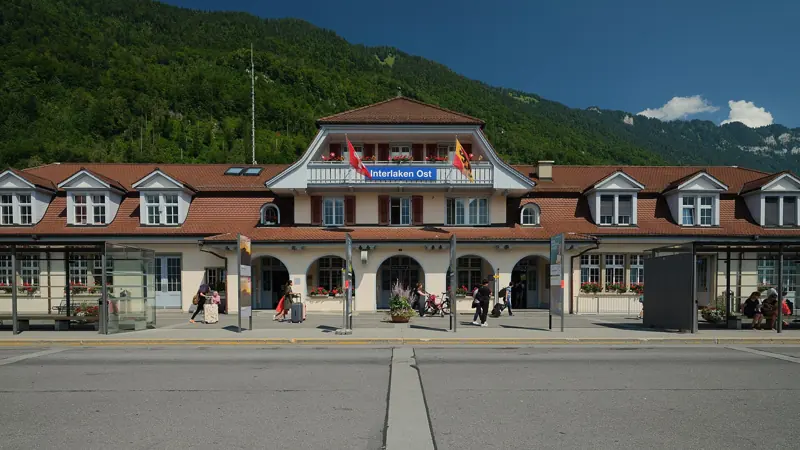
From Interlaken Ost, change at Spiez for a train through the Lötschberg Base Tunnel to Visp, then continue to Zermatt, for about 2 hours 15 minutes to 2 hours 45 minutes in total. Our guide to getting around Switzerland by train covers the other classic routes, and the Switzerland itinerary shows where Zermatt fits in a first trip. From Lucerne, the fastest connections usually run via Bern and take about 3 to 3.5 hours.
On the Glacier Express
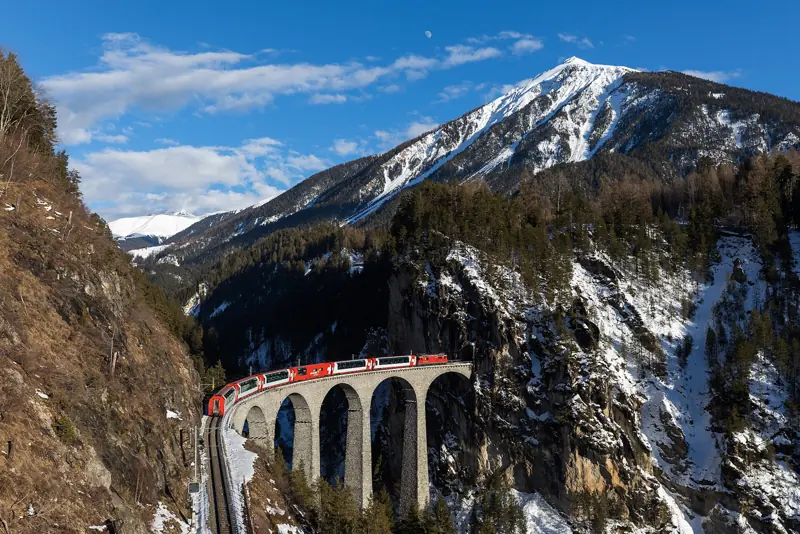
The Glacier Express links St. Moritz or Davos to Zermatt in about eight hours, through the Oberalp Pass and Andermatt. It's a scenic trip rather than a fast connection, and it needs a seat reservation on top of a ticket or Swiss Travel Pass. The train takes a break each autumn: in 2026, it didn't run from October 11 to December 4. See our Glacier Express guide for the route and the booking.
Driving to Zermatt
Zermatt is car-free, so drivers leave their car in Täsch, the last village before Zermatt, about 5 km (3 mi) down the valley. The Matterhorn Terminal in Täsch has a large covered car park (CHF 16 per day for a standard car as of 2026, slightly less for stays of 8 days or more) and the station for the shuttle train.
The Täsch–Zermatt shuttle runs every 20 minutes for most of the day, with extra night trains at the end of the week, and takes 12 minutes. Luggage trolleys roll straight onto the train. A single ticket costs about CHF 8 to 9 for adults. Licensed taxis also run between Täsch and Zermatt.
Swiss Travel Pass and tickets
The Swiss Travel Pass covers the whole train journey to Zermatt, including the Matterhorn Gotthard Railway from Visp. It doesn't cover the mountain railways once you're there: the Gornergrat and the Matterhorn Glacier Paradise give pass holders a discount, usually 50%. For a short trip that only includes Zermatt, compare the pass with point-to-point Saver tickets in the SBB app, or with a Half Fare Card: our Swiss Travel Pass vs Half Fare Card comparison does the math.
Luggage and arriving in the village
Zermatt station is in the center of the village, and many hotels are within 10 minutes' walk. Small electric taxis wait outside the station, some hotels send an electric shuttle to meet guests (ask when you book), and a free electric bus serves the village.
If you'd rather not carry your suitcase across Switzerland, the SBB luggage service can send it ahead from your departure station to Zermatt. Book it a day or two in advance and check the cut-off times at your station.
Where to stay when you arrive
For a first stay, choose a hotel in the village center, within walking distance of the station and the Gornergrat railway. Our where to stay in Zermatt guide compares the village, the quiet Riffelalp and budget Täsch, and our list of things to do in Zermatt includes a 3-day plan. If you're driving and staying in Zermatt, the spa hotels below are both a short walk from the station.
Mont Cervin Palace
Zermatt · Valais
Why we picked it: Grand hotel in the center of car-free Zermatt with a large spa and indoor/outdoor pool.
Check rates & availability →The Omnia
Zermatt · Valais
Why we picked it: Design hotel on a rock above the village, with an indoor-outdoor pool and Matterhorn views.
Check rates & availability →See hotels in Zermatt village center →
Frequently asked questions
What is the closest airport to Zermatt?
Sion is the closest, but it has very few scheduled flights. In practice, fly into Zurich or Geneva: both airports have their own train stations, and the trip to Zermatt takes about 3.5 hours from Zurich Airport and about 4 hours from Geneva Airport, with a change at Visp.
How long is the train from Zurich to Zermatt?
About 3 hours 15 minutes from Zurich HB, with one change at Visp. The first leg runs through the Lötschberg Base Tunnel to Visp in about 2 hours, then the Matterhorn Gotthard Railway climbs to Zermatt in a little over an hour.
Can you drive to Zermatt?
Not into the village. Zermatt is car-free, so you drive as far as Täsch, park at the Matterhorn Terminal (CHF 16 per day for a standard car, as of 2026) and take the shuttle train, which runs every 20 minutes and takes 12 minutes.
Is the train to Zermatt covered by the Swiss Travel Pass?
Yes. The trains to Zermatt, including the last section from Visp, are covered by the Swiss Travel Pass. The Gornergrat railway and the Zermatt cable cars aren't: pass holders get a discount on them instead.
How do you get from Interlaken to Zermatt?
By train, in about 2 hours 15 minutes to 2 hours 45 minutes, with changes at Spiez and Visp. Trains run about every hour during the day.